The Summit City. The City of Churches. Home of Concordia Theological Seminary and former home of Concordia Senior College, Concordia College, and what is today Concordia University Chicago. Former haunt of LCMS organizers Friedrich Wyneken and Wilhelm Sihler. Able to boast of 31 LCMS churches, ten LCMS elementary schools, one of the nation’s largest LCMS high schools, an LCMS newspaper, a Lutheran social services agency, a Lutheran Foundation, a TV ministry, the synod’s oldest ladies’ aid, and the list goes on.
Relevant to the purposes of this blog, Fort Wayne can also boast of one of the proudest Walther League histories of any city in the United States.
Fort Wayne’s first Lutheran Jünglings-Verein and Jungfrauen-Verein (young men’s and young women’s societies) were organized by 1852, making them among the oldest in the LCMS. As St. Paul’s birthed multiple daughter congregations (in 1867, 1883, 1893, and 1899), a “German Lutheran Young People’s Society of Fort Wayne” was organized to help foster fellowship between young Lutherans across the city.
When the young men’s society of Trinity, Buffalo, issued invitations to help create a national Lutheran young persons’ league, St. Paul’s and Emmanuel’s young men’s societies jumped at the opportunity, becoming two of the fourteen charter societies of the Walther League. The following year, Fort Wayne played host to the second Walther League convention, the same convention where the league adopted its long-beloved name. Fort Wayne went on to host six more national conventions between 1898 and 1929, tying Milwaukee as host to the greatest number of Walther League conventions. The city also played host to many conventions of the league’s Indiana District.
1929 Walther League convention souvenir stamp
Fort Wayne was also the home of numerous leaders in the Walther League, including many members of the executive board (3/4 of the board were Fort Wayne residents throughout much of the 1920s) and three Walther League presidents (F. A. Klein, 1904–1909; Ernest Gallmeyer, 1928–1933; and Walter E. Helmke, 1933–1938). F. A. (“Pap”) Klein, whose day job was teaching at St. Paul’s school, additionally gained national popularity in his role as field secretary (1910–1919). During those ten years, Klein spent nearly every weekend on the road, “boosting” for the league in cities across the United States. Klein’s efforts paid off handsomely, resulting in growth from 3,800 members in 1910 to 23,000 members in 1919.
Meanwhile, Walther League membership in Fort Wayne grew rapidly too. In 1910, all of the leagues in and around the city joined hands to create a unified Fort Wayne city league, sponsoring regular plays, banquets, concerts, athletic tournaments, parties, etc. By 1915, the city boasted that it was “the brightest spot on the Walther League map.” By 1921, Fort Wayne had over 1,500 members; by 1924, that number had increased to 2,000. Two years later, the Walther League societies in Fort Wayne and Allen County collaborated in publishing their own monthly newspaper, the Walther Leaguer.
In 1917, the Fort Wayne league helped to organize the Fort Wayne Lutheran Choral Society, which held regular concerts both in Fort Wayne and occasionally across the country. The Fort Wayne Lutheran Basketball Association and Fort Wayne Lutheran Dartball League were both organized around this time, as were separate leagues for softball and bowling. Fort Wayne also had an active hospice committee and had been raising funds to purchase a house for young Lutheran men and/or women to stay in when the Great Depression put an end to those plans.
In 1922, the Fort Wayne Walther League collaborated with the American Luther League (headquartered in Fort Wayne) and St. James Lutheran Church in Lafayette, IN, to sponsor the creation of the “Purdue University Concordia Club,” which was the forerunner of today’s Beta chapter of Beta Sigma Psi.
Original structure of the “Purdue University Concordia Club,” a home for young LCMS men studying at Purdue University.
Though certainly a significant project, this was not Fort Wayne’s first venture in charitable activity outside of its own borders.
The Walther League’s most famous project—the Wheat Ridge Sanitarium—got its start thanks to the efforts of a Fort Wayne leaguer. Dr. Heinrich G. Merz was a practicing physician in Fort Wayne when he contracted tuberculosis. He moved temporarily to Denver for his health, where he witnessed the plight of many of his fellow Lutherans who were also suffering from the disease. To help ease the overcrowded conditions and provide financial assistance for poor Lutherans who could not afford treatment, he spearheaded the creation of a Lutheran Sanatorium Society in October 1903. He appealed to the Walther League for assistance the following month, and in January 1904, he received his first financial contributions—which came from his home town.
The Fort Wayne Walther League also assisted the American Luther League in its efforts to defend parochial schools from outside threats in the early 1920s and enthusiastically supported KFUO and The Lutheran Hour when they first came on the scene in the 1920s–1930s. When the Lutheran orphanage in Indianapolis found itself in need of funds, Fort Wayne, together with the other societies in the state, immediately set about raising funds. The same was true when several missionaries requested funds to support their activities overseas.
One reason the Fort Wayne league was so large and successful during this time is that it had some truly impressive local leadership. Unlike most Walther League societies, the Fort Wayne societies allowed married couples to remain as active members starting fairly early on. Many older members also remained in the league as honorary leaders and mentors, providing the league with stable, continuous leadership over a span of decades.
For example, Ernie Gallmeyer, mentioned earlier, was an active leader in St. Paul’s Walther League society, served as president of the International Walther League, and served as president and chairman of the Arcadia Summer Conference Association. He also helped raise funds to buy Valparaiso University, served as president of the International Lutheran Layman’s League, and held numerous positions of service and authority in other charitable and civic ventures in Fort Wayne, all in addition to working as the treasurer of a local realty firm.
August Becker was, at 72, a retired, well-to-do businessman, serving on the advisory board of the Lutheran Hospital, the board of directors of the Lutheran Deaconess Association, and the board of trustees of the Lutheran Children’s Friends Society (today Lutheran Social Services). He was also an active Walther Leaguer. August Borgmann, 59, was another active member. Charlie Dickmeyer, 43, was another. Both were prominent businessmen. Dr. Edward Kruse, 43, a physician at the Lutheran and Methodist hospitals, was still another.
Another businessman, Herman Gerdom, deserves special mention. Gerdom was elected as secretary of Zion’s Walther League shortly after joining the society as a young man. Under his leadership, the membership climbed to over 300, a monthly newspaper was started (the Zion’s Booster), and, after 13 years of planning, a massive three-story parish hall, complete with auditorium/gymnasium, cafeteria, and meeting rooms, was donated by Zion’s Walther League to the church at a cost of $125,000 ($2.2 million in today’s currency). This was no doubt one of the most impressive accomplishments in the Fort Wayne Walther League’s history.
ADDENDUM, 1/21/2023: I can’t believe I forgot to mention this, but Fort Wayne was also the home of architect J. M. E. Riedel, who designed the ten-sided star logo that the Walther League adopted in 1896.
✠
Having looked a bit at Fort Wayne’s proud Walther League history, what about today? With its large Lutheran population, many congregations and schools, and one of the synod’s two seminaries (to say nothing of its sizeable Lutheran Foundation), I believe that Fort Wayne is ideally suited to become the breeding ground of a renewed Walther League.
Fort Wayne has the Lutheran population density to once again support a Lutheran choral society, Lutheran athletic leagues, and, as time goes on, possibly even a new Lutheran youth building. It has prominent lay members who could offer advice in creating a new league. It has a large (though shrinking) number of older members who remember their Walther League involvement fondly and who may be willing to support its resurrection.
In addition, Fort Wayne is relatively close to a number of active LCMS campus ministries—at Purdue, Ball State, Indianapolis, Terre Haute, Valparaiso, and so on. It is fairly centrally-located for many entertainment, cultural, and natural attractions in the East North Central States, including the ever-popular Cedar Point amusement park. It is the headquarters of the LCMS’ Indiana District, with the benefits that entails.
It is also, incidentally, my hometown. So if you’d like, you can consider this whole post a bit of advertising for what once was, and what I believe could be again. If you’re from the Fort Wayne area and like the idea of bringing the Walther League back, let me know. Same goes if you know of someone else who might be so interested.
✠
Concordia Theological Seminary will hold its annual symposia series this week, bringing many pastors to the Fort. If any readers will be in town and would like to talk about resurrecting the Walther League, I would be happy to arrange my schedule to meet any night but Monday. Just let me know by responding here or, if you have the relevant information, contacting me via text, email, or Facebook.
3 responses to “Fort Wayne”
Anthony Johnson
Where are you at with things now on a new Walther League? Any new developments? Thanks!
let’s go! The fact that we hold annual youth events (district and national) at secular venues is odd….let’s resurrect the league and bring young people to the campus at Ft Wayne or perhaps LCC in Wyoming.
The following article originally appeared in the Vereinsbote—The Walther League Messenger, in February 1916 (Vol. 24, No. 7, p. 207). It contains some useful advice that I figured was worth reprinting here.
Many young peoples societies’ are conducted similar to a show. While the organization has a good manager, things run along smoothly. The members come to be entertained; they regard the dues as a sort of an admission price and feel that their dime entitles them to criticize to their heart’s content every move that the society has taken. If the manager becomes discouraged, marries, or leaves the city, the society at once falls into a state of inactivity until another “prophet” arises.
There is a fallacy in the philosophy of this system. A society needs, yes, must have leaders; however, the meaning of leadership is not always understood. The highest type of leadership is not in being an indispensable member, but rather in rendering an indspensable service to your society. It is much more difficult to teach some one else to work in a society, than to do the work oneself. It is a rather universal complaint, no matter in what part of the country one may be, that a few do all the work; yet very often those who complain, revel in the thought of their self-appointed martyrdom; they actually do not wish to see anyone else share in their glory. The acid test of good leadership is the general development of the society, a society more useful, stronger, and better able to do its work, even if the best member or several stellar members should suddenly be eliminated, ah! that is a worthy task of efficient leadership. Walther League Kultur is the aim and movement to develop each individual character by a religious, mental, social and physical growth. It requires an efficient system and able constructive leadership. Each member must be brought to realize that he or she is a integral part of the society and is supposed to share in the responsibility. This necessitates that each member give some service and bring some sacrifice; for then only will he feel that the society is his society. On the other hand, the society must distribute to each a part of its activity and a part of its management.
To illustrate: Let anyone arrange fifty lectures to be delivered before a society; read a hundred stories; and give untold entertainment and advice. After five years make an investigation and inquire of those who were listeners; it will be discovered that only precious little of the information dealt out has become their property. However, after twenty-five years, every individual can vividly relate of an occasion at which he took part in a dialogue, held an office, gave a reading, had charge of an outing or athletic event. This explains the difference between theory and practice; Walther League Kultur demands that each member receive both.
Many ideas to divide the work and responsibility have been advanced in the Messenger in past years. A young peoples’ society ought to be governed and conducted by young people. Older folks should only supervise and advise. There is greater virtue and more good accomplished in teaching twenty others to be president or officer of a society by giving them a chance of holding office and helping them, than by being president for ten years yourself. Short terms of office and imperative changes at each election will give the greatest number an opportunity. A society can be divided into sections. Each section takes charge of the Literary Program and Social Events for a month, in turn, where each member of the section is taught to take some part in the program and to do some work of the arranging of the social. Each member of the standing and special committees should be given some definite part of the committee’s work. A society should diffuse its honors; its work, its responsibility, and in this manner develop the character and personality of every member. That is the meaning of Walther League Kultur.
Several people—both in personal messages and in comments elsewhere on the internet—have mentioned that “Walther League Redux” does not exactly roll off the tongue. A new league needs a new name!
I couldn’t agree more.
“Walther League Redux” is not a name I would propose for a new league but is instead the unimaginative name I chose for this blog. (I spend most of my leisure time studying history and messing with archives. People who enjoy that sort of thing are not typically renowned for their creativity.) No, even dropping “Redux,” the “Walther League” is probably not the way to go for a new group. So what is?
In my opinion, it is probably slightly too early to be thinking about that sort of thing now. The original Walther League organized under the name, Generalverband der lutherischen Jugend- und Jungmännervereine der Synodalkonferenz (General Association of Lutheran Youth and Young Men’s Societies of the Synodical Conference). It only adopted the shorter, well-known “Walther League” a year later.
I would suggest that the name could be one of the orders of business at the first meeting of the organization. Instead of trying to come up with a name before getting organized, it makes more sense to me to try to get organized, then let the founding members decide on a name for themselves. Corpus Christi, Koinonia, The Federated League of Young Adult Societies of the Lutheran Church—Missouri Synod and Its Partner Church Bodies. . . . The possibilities are endless.
That said, here are a few preliminary thoughts on the matter:
Branding is important. The late Klemet Preus, in the introduction to his book, The Fire and the Staff, mentioned that he initally wanted to give the book a long technical title. The publisher rightly pointed out that no one would read it if he did. A new league needs a name that people would find compelling, or at the very least not off-putting.
Relatedly, “league” is probably out. No popular non-athletic organization founded in the last 50 years uses “league” in its name.
Brevity is a virtue.
Latin or Greek theological words/phrases might be the way to go. Koinonia is awfully overused these days, and Corpus Christi has been claimed by the Europeans. Fortunately, there are plenty of other options (Una Sancta, for example, hasn’t been used by any organization in the synod for quite some time).
If you have any other thoughts on criteria or suggestions for a new name, I’d be quite interested in hearing them. If you think the name is of vital importance and should be decided now, state your case! My thoughts are far from settled on this point, and I’m guessing others are probably in the same boat.
Today’s post will discuss the Walther League’s founding and some of the challenges of its early years. If you’re not interested in the history, you can skip to part IV, which looks at some of the lessons that can be gleaned from it.
I.
One Sunday in 1875, Pastor Carl Gross of First Trinity Evangelical Lutheran Church, Buffalo, NY, asked the young men of his congregation to stay after the service to discuss creating a new young men’s association. Only eight members stayed, but Gross decided to press ahead anyway, scheduling a meeting for the following Sunday. The eighteen men who attended the first meeting wasted no time, appointing a chairman and secretary at their first meeting, adopting a constitution at their second meeting the following week, and electing a full slate of officers a week later. Within a month, the society purchased furniture, established a lending library, sponsored a debate, and grew to twenty-six members between the ages of 16 and 30.
Shortly thereafter, a similar young women’s society was organized, consisting of both single and married women. The ladies’ and men’s societies quickly began doing so many activities together that they became functionally one organization.
II.
In 1882, several members of Trinity’s Lutheran Young Men’s Association proposed creating a national association of Lutheran young people’s societies. A committee sent letters to a select group of pastors from across the country, soliciting their opinions on the matter. Fifteen pastors responded positively, but only three agreed with the Buffalo group’s organizational scheme. The other twelve pastors proposed twelve unique plans of union. In response to this great diversity of opinions, the young men from Trinity decided to let the matter drop.
A second attempt was made in 1888, but nothing came of it. Finally, in 1890, the Young Men’s Association decided to try again, this time starting close to home and without involving the clergy. In 1892, they joined the young men from St. Andrew’s Lutheran Church, also in Buffalo, to create Der General Verband der Lutherischen Jünglings Vereine der Synodal-Conferenz (The General Association of Lutheran Young People’s Societies of the Synodical Conference). It was an ambitious (and unwieldy) name that clearly showed the ambitious intentions of its founders.
A monthly newspaper—Der Vereinsbote—was started in June. Its inaugural issue included an appeal from August Senne, the new pastor of Trinity, to create a truly national association:
One of our societies has the goal to build and enlarge God’s kingdom as much as possible, to strive to support academic vocations, and to cultivate entertainment and edification in Christian spirit and mind. . . . But how much better could these goals be reached, and how much more good could be accomplished . . . if the individual societies would band together?
[Through a national association] our young Christians in different parts of the land would . . . be pushed closer together; they would acquaint and befriend themselves with one another. If a member of one of our societies would move to a strange city, which happens so often today, and there existed in this city a society from our association, then this member would have friends to whom he could turn and who would help him.
Pahl, Hopes and Dreams of All, 17–18.
A national convention was announced for May 20–23, 1893. Trinity members prepared agendas, arranged for evening entertainment, and organized a trip to Niagara Falls. Four major points were raised for discussion.
The most important goal . . . is to keep our dear youth in the Evangelical Lutheran Church. . . .
The second reason for combining individual societies is that our young Christians in the various parts of the country would be pulled closer together.
The Central Association could have a yearly meeting, at which the state of the Evangelical Lutheran Church Young Men’s Society could be discussed. . . .
The support of a common paper . . . should be discussed.
Pahl, 19.
Sixteen delegates from twelve societies attended the first convention of the new Generalverband der lutherischen Jugend- und Jungmännervereine der Synodalkonferenz (General Association of Lutheran Youth and Young Men’s Societies of the Synodical Conference), representing 693 young people from Buffalo, New York City, Brooklyn, and Rochester, NY; Milwaukee; Fort Wayne; Dallas; Detroit; and Danbury, CT. At the second convention held in Fort Wayne the following year, the delegates chose a shorter name: Die Walther Liga—The Walther League.
III.
Growth of the new league was slow, hampered by uninterest from other congregations and outright opposition from synodical leadership. Another issue was the existence of competing leagues.
In 1902, several San Francisco-area young people’s societies organized the “Buehler Bund,” named after Pastor Jacob Buehler, “the Father of Lutheranism on the Pacific Coast.” On the east coast, the young people’s societies from ten New England cities organized the “Missouri Luther League” in 1904. In Rochester and New York City, a “Lutheran Young People’s Society of Greater New York” sprang up. In Buffalo, several societies started their own Bund in opposition to the Walther League.
Several attempts were made to merge these societies, initially to no avail. Language was one obstacle—the Walther League was committed to the use of German, while the New York association did its work in English. Distance was another—the Buehler Bund was initially uninterested in joining the Walther League due to the distance between the Bay Area and the cities in which the Walther League operated.
Another obstacle was organization. The Walther League constitution required each chapter to be affiliated with and under the control of a local congregation. Some cities had unified, multicongregational societies already before the Walther League was organized. These were not allowed to join the new league without disbanding and reorganizing according to the Walther League plan, which they were unsurprisingly loathe to do. This rigid adherence to a set form of organization, while understandable given the circumstances of the day, hampered the league’s early growth.
A similar situation arose in the early years of the Lutheran Layman’s League. In Cleveland and Fort Wayne, unified city leagues were organized, violating the bylaws of the LLL, which required that each chapter be affiliated with a single congregation. In Cleveland, after being warned off by synodical officials in St. Louis, the unified society disbanded, setting back LLL work in that city immensely. In Fort Wayne, the laity responded to such synodical warnings by forming their own national league and banning all pastors and teachers from joining. Within two years, the new Fort Wayne-based American Luther League grew to 32,000 members nationwide.
This split was certainly more dramatic than those faced by the Walther League in its early years, but the precipitating cause—rigid adherence to a prescribed language, structure, or constitution—was the same.
IV.
So what lessons can we learn for today?
First, don’t delay. Pastor Gross showed the way here, proposing a young men’s society in his church one week, calling the first meeting the next week, and having organizational meetings each of the two weeks after that. In less than a month, he completed his goal. Now, starting something on a state or national level will obviously take more time, but it is still important to keep things moving along.
Secondly, growth will likely be slow. It took the Walther League 30 years to reach 10,000 members nation-wide, and that at a time when people were very gung-ho about joining leagues, societies, associations, etc. Even at the congregational level, expect to be disappointed by interest and turnout. Most people are not ambitious first-movers. Most people just go with the flow. But the positive side of that is that once you get something going, and it’s proven to be successful, you might very well reach a tipping point where suddenly legions of people will want to join. The Walther League’s growth from 1908 to the 1920s demonstrates that well. During those 15+ years, the league consistently grew by 20–30% annually, after an initial 15 years of fairly slow growth.
Thirdly, flexibility is important. The Walther League’s very formation was delayed by ten years partly due to competing ideas about organization. Even after it was founded, the league turned away several groups who wanted to join because they had mutually exclusive organizational schemes. The Lutheran Laymen’s League experienced similar issues two decades later. An organization’s structure is obviously important, but it should not take precedence over its actual mission.
Fourthly, perseverance is vital. It took ten years just to create the Walther League after the idea was first proposed. If its proponents had given up, the great blessings that the league later provided to the church would never have come about. Later, in 1909, the league nearly disbanded due to a combination of “no money, many opponents, and few friends.” Instead of disbanding, the league voted to embark on an aggressive promotion campaign, leading directly to the rapid growth mentioned above. Today, new leaguers can probably likewise expect slow growth, opposition from within the church, strange looks from outside the church, and sporadic set-backs and struggles. When that happens, the best approach is to shrug your shoulders, mutter c’est la vie, and plow ahead anyway.
Finally, be ambitious. The young men’s societies from two congregations in the same city got together and decided to create a “General Association of Lutheran Young People’s Societies of the Synodical Conference.” They didn’t create a league for the city, or the state, or even just a single synod. They tried to create something for all confessional Lutherans in the United States. Eventually, they succeeded. So today, let’s not try to create something for a specific congregation or city or state, but something for the entire country (and while we’re being ambitious, why not consider a league for the entire International Lutheran Council or at least the LCMS and its many partner churches? The Europeans even have a pre-existing group we could work with).
In 1882, the Lutheran Young Men’s Association of Trinity, Buffalo, NY, proposed the creation of a national association of Lutheran young people’s societies. After several false starts and a decade of general uninterest from other societies throughout the country, twelve societies finally met in 1893 to form a national league, which they named after the late C. F. W. Walther.
The goal of the league was simple: “to assist in keeping our young people within the Church.” Growth was slow, and the league initially experienced a great deal of opposition from congregations and synodical church leaders. The members nevertheless persisted, launching their own newspaper, holding annual national conventions, and steadily drawing in new societies across the country. Recognizing that many young people are lost to the church when they move to a new city, the league embarked on an ambitious hospice program in 1900, with the goal of establishing Lutheran hospices in every major urban area in the country. The Walther League eventually came to own 14 youth hospices, besides operating an additional 1,200 hospice committees in cities and towns where the local chapters could not afford to purchase a house for that purpose.
In 1905, the Walther League began its support of the Evangelical Lutheran Sanitarium, a tuberculosis treatment facility at Wheat Ridge, Colorado. Over the next 16 years, nearly 950 patients passed through the tent colony, until, in 1921, the Walther League built a $225,000 permanent hospital building. The league took complete ownership and control of the sanitarium in 1927. It continued to operate the sanitarium until 1959, when improved tuberculosis treatments rendered its continued existence unnecessary.
The Chapel of the Good Samaritan at Wheat Ridge, paid for entirely through the efforts of the Walther League. You can also see a picture of the last surviving Wheat Ridge tuberculosis tent here. After the sanitarium closed, the Walther League sold the property to a Lutheran hospital association.
As mentioned above, the league grew slowly in its first 15 years, standing at just 2,721 members in 85 societies by 1908. In 1910, Walther League president F. A. Klein (known fondly to the leaguers as “Pap”) transitioned his efforts from leading the group to advertising for it. For the next ten years, he spent nearly every weekend on the road, “boosting” for the league in cities and towns across the country. As a result of his efforts, the league grew to 23,000 members in 356 societies by 1919.
During World War I, the Walther League sent out over 400,000 Bibles, prayer books, pamphlets, and other literature to servicemen in the army and navy, raising over $25,000 for the purpose. This phenomenal work did much to increase the popularity of the league. Between the indefatigable efforts of F. A. Klein and the Walther Leaguers’ service efforts during WWI, the organization was well-positioned for rapid growth over the next 20 years.
In 1920, the Rev. Walter A. Maier was called as the first full-time executive secretary. Several other full-time employees were soon added, including a Junior secretary to encourage efforts among high-school aged youth (previously, the league was almost entirely a young adult group). A new campground was opened at Arcadia, MI, in 1922, fully owned by the national organization, while several Walther League districts also purchased additional campgrounds. The league provided significant aid to the European Relief effort post-WWI, purchased land and erected structures for the use of foreign missions, and began printing additional Bible study materials and periodicals for its members.
Walter A. Maier during his later tenure as “Lutheran Hour” speaker
The Great Depression saw both challenges and opportunities. Most of the Walther League hospices were closed and most of the national staff positions eliminated. Lack of funds forced most societies to discontinue support for foreign missions. Instead, leaguers opened local food banks and soup kitchens, instituted a national clothing campaign, and helped to fund the new Lutheran Hour radio program, led by former Walther League leader Walter A. Maier. By 1936, the league could boast a membership of 85,000 in 2,180 societies.
This continued growth was made possible in part by a pattern of strong leadership within the league. In 1933, the Rev. Dr. O. P. Kretzmann, then a professor at Concordia Theological Seminary, became the new executive secretary of the Walther League. Kretzmann was an energetic, eloquent, and charismatic leader. Within months, he led a complete reorganization of the league, developing a “comprehensive program” in 1934 and publishing a 290-page manual to assist local societies the following year.
Source: Walther League Manual, p. 36
In 1937, Kretzmann launched The Cresset, a monthly “review of literature, the arts, and public affairs.” His transfer to the presidency of Valparaiso University in 1940 helped strengthen the already significant ties between the league and the still relatively new LCMS-aligned university.
In 1941, the United States once again found itself at war. An estimated 25,000 Walther Leaguers served during WWII, and the league naturally focused many of its efforts to aiding its members in uniform. The Walther League Messenger included regular articles on its members’ experiences in the war, including, sadly, many obituaries and lists of members killed in action.
On a more positive note, the league constructed a beautiful new headquarters in 1942, just in time for its 50th anniversary the following year. After WWII’s end, leaguers once again held food and clothing drives to help the destitute in Europe.
Unfortunately, the 1940s also saw the first rumblings of serious trouble. The leadership was divided over opposition to communism, leading the influential Walter A. Maier to cut ties with the organization. Returning soldiers found many of the traditional Walther League games and activities unappealing after having faced the horrors of war. As older members left, the remaining membership grew gradually younger, until the Walther League eventually became an almost exclusively high school aged group. This in turn led to increased reliance on adult leadership from the synod’s Board for Young People’s Work.
At the same time, the synod itself began to experience tremendous internal tension. In 1945, 44 prominent LCMS pastors and professors (including several Walther League leaders) signed their names to A Statement, which condemned the synod as legalistic. Over the next 30 years, questions of church fellowship and Biblical interpretation led to a schism within the synod, culminating in a student and faculty walkout at Concordia Seminary in St. Louis in 1974.
The Walther League was hardly immune to these pressures, and much of its leadership tended to take the more theologically liberal side on most points of controversy. Meanwhile, the league had other struggles, largely due to its increasingly youthful membership. The organization’s financial picture worsened almost annually throughout the 1950s and ’60s, partly because its teenage members could not provide the same level of support as its former working-age young adult members.
The Walther League also became, at least in the eyes of some, more focused on entertainment (and later, politics) than it was on Bible study and “keeping our young people within the Church.” As one complainant wrote,
It seems to me that the Walther League leaders, instead of keeping the youth with the church, are encouraging them (unintentionally) to be conformed to the world.
Jon Pahl, Hopes and Dreams of All, p. 239
As the 1960s wore on, this complaint became increasingly relevant. The Walther League held its final convention at Purdue University in 1968, voting to become a “youth-led and issue-oriented” organization. Some of the issues tackled by the new league—racism, injustice, and hunger—were commended by the synod. Other activities—petitioning Congress to support nuclear disarmament, supporting the Black Panthers, and handing out instructions on how to dodge the draft—were not. As a consequence of the league’s new activist approach, annual donations dropped to only $2,000 in 1970. The headquarters was sold in 1971, and in 1977, the LCMS dropped its affiliation with the league entirely. By this point, the Walther League consisted of nothing more than a small endowment fund and a board of directors who met occasionally to disburse the interest.
Finally, in 1989, the Walther League’s board of directors met for the last time. The remaining endowment fund assets were transferred to Wheat Ridge Ministries ($243,000) and Lutheran Volunteer Corps ($89,000).
This is the way the world ends Not with a bang but a whimper.
✠
An update on the blog: I’ve been gratified to see so many positive responses to my initial post, both here and off this site. My next post will be a more detailed look at the league’s early history, focusing on what challenges they faced, what worked, what didn’t, and what lessons we might be able to learn in trying to create a new league today.
I’ll ask again that if you think creating some sort of modern-day Walther League is a good idea, please spread the idea around. The more people who are interested in the idea before it starts, the more likely it is to actually get off the ground.
4 responses to “A Short History of the Walther League”
Anonymous
Great article. I want to chat with you about a Walther League 2.0 that we got cooking in San Antonio, Tx. My email is michaelc@stpaulsa.org
I was involved in Walther League activities as a youth in California in the mid-1960’s. I did not know about the disagreements it experienced during this time. I am sad to read this. However, my experiences in the Walther League were very positive, and I have lasting, warm memories of them. My email is ronald.harnack@gmail.com. May God bless you all!
I have never experienced the Walther League, but after reading this blog, I am in absolute support of it. With the age and decrepitude of the current societies and memberships, a revival is absolutely needed to secure a coherent community in a world evolving into a cesspool. I would love to find a forum of like-minded Walther League individuals to really dig into revitalizing it. gdubgrinn@gmail.com
[…] and his wife Dora (Twillman) hosted many weekend retreats for members of their church and the Walther League. There were so many events at this facility, and so many stories told by the family, that everyone […]
I’m a Millennial, and my brain has been ruined by Twitter. Isn’t there a thread where I can read this stuff instead? Click here: TL;DR
I’m a Zoomer. Is there a shorter version for me? Click here: TL;stillDR
I.
Between 1893 and 1968, hundreds of thousands of young men and women joined the International Walther League, the official youth auxiliary of the Lutheran Church—Missouri Synod. At its peak, the league owned and operated several camps, a collection of youth hostels, a tuberculosis sanitarium, and a headquarters building in downtown Chicago. It also published six regular periodicals, supported foreign and domestic missionaries, provided financial support to the Lutheran Hour and to the synod’s Army and Navy Commission, ran multiple athletic leagues and choral societies, and provided invaluable volunteer labor and financial assistance to the thousands of LCMS congregations that sponsored a Walther League chapter, to say nothing of the countless Christian friendships and marriages that it fostered and encouraged.
Unfortunately, caught up in the societal changes of the 1960s, the league voted to abandon its traditional purpose and instead become a politically active, social justice-focused group. Its final convention was held at Purdue University in 1968, and it lost its affiliation with the LCMS in 1977. Since then, the LCMS has operated the Lutheran Youth Fellowship (LYF)/YouthLead for its high school students, while young Lutherans post-high school have had no dedicated national organization. It is for the sake of this latter group that, in the opinion of the author, it is time to bring the Walther League back.
II.
But first, why even consider this idea?
According to a 2017 LCMS Congregational Survey, only 31% of LCMS members remain in the LCMS between confirmation and adulthood. This statistic has held steady for three generations, with a similar one-in-three retention rate for Gen Xers and Baby Boomers (p. 26). Based on church attendance rates, it seems that young adults are most at risk of leaving the church immediately following their high school graduation.
Source: Relationships Count,p. 186
Unfortunately, today the LCMS doesn’t have a dedicated national youth organization for those who are post-high school. Opportunities and resources abound for high school students: LYF/YouthLead, the triennial National Youth Gathering, annual Higher Things conferences, various district gatherings and retreats, a youth ministry podcast, a website with a variety of youth resources, six dedicated national youth ministry staff members. . . . The list goes on. On the local level, many congregations also have active high school youth groups, many with part- or full-time DCEs, youth directors, or youth-focused associate pastors.
As far as I can tell, that short list is the sum total of resources directed to young adults in the LCMS at the synodical level.
The synod recognizes that the post-high school years are among the most dangerous for young Christians, yet it directs precious few resources toward men and women in that age group, especially for those who choose not to go to college (an increasing percentage of the population, especially among men).
Now, I say this not to denigrate the synod, but simply to point out the facts on the ground. In fact, the synod made an admirable attempt to develop young adult resources on the synodical level only a few years ago, as the defunct podcasts and social media accounts suggest.
From 2012 to 2021, the Rev. Marcus Zill was employed by the synod as a part- and then full-time coordinator/director of LCMS campus ministries. One of his great accomplishments was the organization of four national LCMS campus ministry conferences in 2013, 2015, 2017, and 2019. Several hundred youth attended each of these conferences, making them the largest gatherings of LCMS college students in 30 years. Unfortunately, the synod has many different mission programs but finite funds, and so after only 6½ years, Zill’s position was eliminated.
This points to one of the great strengths of the Walther League system: it began as a grassroots movement and was always financially and organizationally independent of the LCMS, which meant that it was unaffected by the vicissitudes of synodical funding priorities.
But enough background discussion! What concrete proposals am I making? Short answer: create a new national LCMS young adult association, taking as a starting point the practices of the old Walther League. I believe this would help address many of the shortcomings noted in recent research on young adult retention in the LCMS.
III.
In 2017, the LCMS organized two surveys on youth issues: the LCMS Congregational Survey and the LCMS Millennial Survey. Key results from these two surveys were published in 2019 in the book Relationships Count: Engaging & Retaining Millennials(available free on Kindle and Apple Books).
As the title suggests, these surveys were focused on the views of Millennials in the LCMS: what caused some to stay and some to leave, what viewpoint differences there were between those two groups, and what impact different congregational practices had on youth retention. Uniquely for surveys of this kind, the creators of the Millennial Survey sought responses from both current and former members of the LCMS, receiving responses from 1,579 young adults within the LCMS and 355 young adults who left the LCMS after confirmation (p. 60–61).
Despite the changes wrought by modern technology and the internet, the problems that young adults face today are not much different from the problems that young adults faced 70, 100, and 130 years ago. It is therefore unsurprising that many of the issues raised in Relationships Count were tackled by the Walther League in the 1950s, 1920s, and 1890s. The rest of this essay will look at individual issues raised in Relationships Count (plus a few other issues), show how the Walther League traditionally addressed each issue, and suggest ways that a renewed league could address the issue today.
Ryan C. MacPherson, in his article, Generational Generosity: Handing Down Our Faith to Our Children and Our Children’s Children, noted that some existing youth programs are less effective at retaining youth than they should be. One major problem is a lack of thorough, factual, historically-informed Bible studies. As MacPherson wrote,
youth need larger servings of theological meat, rather than psychological gravy; attempts to entertain the youth into the church do not succeed in the long run, but instead misshape them into people who crave entertainment for its own sake—which they will soon discover is available in richer variety outside the church.
President Matthew Harrison alluded to this as well, stating, “The key [to retention] is to build a strong Lutheran self-identity among the membership” (bolding original). How best to do this? Provide solid Lutheran Bible studies.
This concern is not new. A resolution at the synod’s 1923 convention included the following:
We recommend that sound helps be provided for work among our young Christians, especially for promoting Bible knowledge. . . . We call attention to the fact that in young people’s societies entertainment is easily overstressed while church history and church work are not sufficiently emphasized.
(1923 LCMS Convention Minutes, p. 51–52)
The Walther League was naturally aware of this problem, declaring that the church “needs first of all a program in which knowledge of the Bible and the principles of Christian faith and life are clearly and interestingly set forth” (Walther League Manual, 131). To assist in promoting deeper study of the Bible, the league published several model yearly Bible study programs, regular theological articles in the Walther League Messenger, Bible study helps in the Workers Quarterly (designed for the leaders of each society), a complete series of lessons in the quarterly Bible Student, and regular essays on faith and culture in TheCresset. As these were all directed toward those of young adult age, the league also published additional resources for teenagers, which I won’t discuss here.
A modern league could once again work to provide a variety of resources that promote solid Lutheran teaching and that would interest young adults, supplementing those resources that are provided by the synod, Higher Things, LHM, etc. Renewed efforts in that vein would presumably be posted directly to the internet, thus saving the expenses of printing and distribution. Such publications could also republish part of the vast trove of Walther League studies and resources where they are still found to be timely. All of this would help alleviate a very serious lack in the LCMS today.
As the authors of Relationships Count relate,
Those [Millennials] with views most closely aligned with what the LCMS teaches were nearly twice as likely to disagree than agree that they felt prepared to defend those views. These young people who hold firm to the teachings of the church likely expected to get more help from their church than they received. As a result, they have had to fend for themselves in defending the church’s theology. This may, yet again, suggest that LCMS churches are avoiding controversy, questions, and doubts that young people face from a culture that is not afraid to raise such issues.
(p. 221–22)
A new league for young people, led by young people, would not shy away from a full-throated defense and explanation of traditional Christian doctrine.
Issue Two! Leadership.
Today’s young adults “are ready for leadership roles. All phases of our research found a strong connection between young adult leadership in the church and young adult retention in the church. This . . . means giving young adults opportunities to lead within the church” (p. 39). Having young adult leaders in a congregation (specifically, younger than 32 years old) was directly correlated with youth and young adult retention (p. 50).
The Walther League traditionally provided such opportunities. All congregational chapters, districts, and the international organization were run by elected officers and committee chairs. Delegates were also elected for the annual international convention. Most young men and women in the LCMS cut their teeth on elections, parliamentary procedure, and the efficient running of a church through their involvement in the Walther League. A renewed league could teach these skills and provide these opportunities once again.
Issue Three! Moving.
“Americans Moving at Historically Low Rates, Census Bureau Reports”
So read the headline on a 2016 census bureau press release. Since then, the numbers have only continued to fall. And yet, even at the current lower rates, two in five young adults live more than ten miles from where they grew up, including one in five who live more than 100 miles away. Looking at older adults, nearly two in five live in a different state than the one where they grew up.
The LCMS Millennial Survey showed even greater mobility. “Of the Millennials we surveyed, nearly half live farther than a two-hour drive from where they grew up, and 40 percent live in a different state” (matching the CityLab data above). Less than a third lived near their hometown (p. 194).
Unfortunately, many thousands of young adults are lost to the church during such times of transition. Exactly how many are lost is impossible to say, as the LCMS congregations included in the 2017 survey had no idea where a full 30% of their confirmands from ten years prior were living (p. 26). For context, this is the same number as those who remained in the LCMS.
Source: Relationships Count, p. 26
This is by no means a new concern! The LCMS had the same issue a century ago, with backdoor losses far outstripping the gains from new converts. The Walther League played a vital role in stemming the loss, earning the commendation of the 1929 synod convention for its tireless work. The Walther League, through its 1200 hospice committees, worked hard to connect travelers and internal migrants to LCMS congregations in their new homes. Special attention was paid to students, with the league noting how important it was
to make the acquaintance of young Lutherans and of others of no church connection, who are attending colleges, universities, and other schools, or who are connected with some public institution. This is a very important duty for all societies situated near such schools and institutions. . . . We should do everything in our power to keep them in a live connection with their church during their student years. . . . It will mean much to all of these young people to have friends of their own faith with whom they may associate in their leisure hours. And just during these years when the foundation for their future career and for the future attitude towards life and its many problems is being laid, it is of the utmost importance that they be kept close to the church and hear the counsel and guidance which it offers.
(Walther League Messenger, Vol. 30, No. 6 (Jan. 1922), p. 226)
1930s Walther League traveler’s card
A new league would almost certainly want to take up this cause again. Regarding travel, its members would likely be well-served to make use of LutheranBnB, a Lutheran Airbnb alternative that currently sits at just over 200 listings. In cities with a large Lutheran population, local societies could eventually explore the possibility of purchasing new designated Lutheran youth hospices/hostels, if it was felt that that would be helpful (as before, these could be used by both temporary visitors and long-term residents). In the meantime, it would probably make sense to restart local hospitality/travelers committees in order to track and welcome those who move to a new location.
Issue Four! “Graduation.”
Youth and young adult retention is higher for those LCMS members who stay close to home after high school than it is for those who leave. But even for those who stay, the transition into young adulthood is not always easy.
The transitional bridge from high school youth ministry to active adult ministry within the same congregation can be more troublesome than one might think. . . . All too often, young adults, when reflecting on their transition from high school to college, share that they found that their church did not have a place for them in the church community after high school. Despite the church still offering Word and Sacraments, many young adults reported feeling as if they graduated from the church.
(p. 194)
The authors of Relationships Count recommend that congregations solve this issue by finding older adults who are willing to serve as mentors to these high school graduates. This is certainly a good solution if a congregation can manage it, but not all congregations will be able to successfully pull it off.
The authors continue with another intriguing suggestion:
In some cases, a single congregation may not have enough graduates to provide a peer group, but relationships can be encouraged through cooperative young adult ministries with other area churches. Then, the home congregation can be a place where they worship and build relationships with members of the Body of Christ of all ages. Due to the ever-changing nature of this age group, this arrangement will need to be very flexible and nimble, but building a trusting relationship with other churches that can jointly invest in one another’s young people can pay long-term dividends for the Kingdom.
(p. 195)
This is basically a description of the Walther League. Having a group of older mentors is of course a good idea, but it is also extremely helpful for young people to have a group of peers to spend time with. Such a group can help span the sometimes-awkward gap and aid in the transition between high school and “adult” church membership. If a single congregation doesn’t have enough young adult members to create such a group on its own, cooperation should be the name of the game. This cooperative spirit, in turn, will likely lead naturally to a desire for cooperation at the state and national level.
Issue Five! Critical Mass.
In 2015, Kristina Lizardy-Hajbi, an analyst with the United Church of Christ, found that congregations with a “critical mass” of young adult members aged 18–34 were much more successful at retaining and bringing in new young adults. Such congregations were also much more likely to be theologically conservative, have a higher percentage of children and youth, and prioritize engagement with young adults.
Relationships Count noted the same issues. Many of the young members who completed their survey struggled to feel comfortable in their LCMS congregation because there was no one else their age. This lack of young adults was the third most common reason Millennials gave for leaving the LCMS (p. 268), while even those who stayed mentioned struggling with loneliness, isolation, and disconnection from the larger congregation due to a lack of peers (p. 279).
While almost all [active LCMS young adults] said that they would not exchange LCMS theology for young adult ministry, just as many said they struggled to find a support system of other people in their stage of life. . . . Many young adults in the survey stressed their need to belong to a group of believers their own age.
(p. 142)
Given this preference, it is unsurprising that congregations that make young adult ministry a top priority have many more young adult members.
Source: Relationships Count, p. 143
The congregations that are the most successful at youth and young adult retention do not just have a critical mass of young members, however. They have a larger number of members of all ages.
Source: Relationships Count, p. 91
It seems that success begets success. This is unfortunate news for the majority of LCMS congregations that have fewer than 300 members in church on an average Sunday. The good news is that cooperation between neighboring congregations might provide some of the benefits that larger congregations naturally enjoy. The connection with the Walther League should be self-evident. Current young adults would benefit just as much from a spirit of cooperation between churches as young adults did 50–130 years ago. Today, as many congregations have fewer young adult members, a transcongregational league would likely do wonders to reduce feelings of isolation and loneliness among young adults within the synod (at least as regards their relationship to their home congregation, though a close group of peers surely wouldn’t hurt in reducing loneliness and isolation in a general sense either!).
Issue Six! The Church Catholic.
For this issue, I’ll just quote the book directly:
The young Lutherans who were the most likely to be retained as active Millennials were also very likely to attend an LCMS Youth Gathering or similar events. These larger events showed up in the data as heavily correlated with strong retention in the church. . . . When they were at these events, they had a chance to see that they are not alone. There were hundreds or thousands of other young people, just like them, who believe what they believe. At regional, national, and international events, such as the LCMS Youth Gathering, young people see the breadth of the Church. Young people benefit as they see their connectedness in the Body of Christ beyond their local congregation and high school years.
(p. 209–10)
Like everything else, this isn’t new. The Walther League Messenger included an article over a century ago, noting that
[Many youth], especially those from smaller congregations, think of their Lutheran Church only in terms of their own local congregations, and imagine it to be a weak and struggling church body. In consequence, they sometimes feel ashamed of the outward appearance that their church presents to others. . .
Annual national Walther League conventions played a similar role to today’s National Youth Gatherings, providing members
with renewed enthusiasm and with gratitude toward God for having led them into the Lutheran church. . . . At home [they] will show new interest in matters pertaining to the congregation, the society, and the Kingdom of God in general. In short, they will become better Lutherans.
Walther League Messenger 28 (1920), 267–68, quoted in Alan Graebner, Uncertain Saints: The Laity in the Lutheran Church—Missouri Synod, 1900–1970 (Westport, CT: Greenwood Press, 1975), 37–38.
The four successful Campus Ministry conferences show that this desire for national gatherings does not end at young members’ high school graduations. One of a new league’s first major projects should be to explore hosting new national gatherings, in whatever form they may take.
Issue Seven! Marriage.
Just as they did in the 1920s (and due partly to similar causes), marriage rates are once again falling to historic lows. Unlike in the 1920s, however, this time the trend shows no sign of reversing.
This would not be bad if, as in medieval Ireland, the decline was the result of devout Christians prayerfully following the admonition of St. Paul. But in fact, it is not. People shack up together, either via a series of one-night stands or via a habit of “serial monogamy.” Once they do pair up, many couples eschew marriage, preferring to simply move in together (and then often back out when one of them moves on). Others opt out of dating entirely, either from discouragement or because they find pornography a “safer,” if fleeting and ultimately unfulfilling, alternative. Still others hold off on marriage until they find The One, sadly setting themselves up for a state of depressing loneliness later in life.
When the broader culture is so broken in so many ways, it becomes increasingly difficult for faithful Christians to navigate the dating scene, even when they try to date within the church. But of course, in many LCMS congregations, things are even more complicated for young members, as there are so few active members their age. Is it any wonder that many Lutherans begin to date outside their home denomination?
Unfortunately, many of those LCMS members who do date and marry outside the LCMS ultimately end up joining their significant other’s church. “Eighty percent of Evangelical Protestants who have a significant other in their lives said that person is part of the same denomination” (p. 233). This of course means still more young members who leave the LCMS, even if they end up in another Christian denomination.
Ultimately, the church could probably do a better job encouraging marriage and teaching its young members how to increase their chances of getting married. An easy first step is just encouraging its young members to meet and spend time together. The Walther League did just that, producing so many marriages that it gained a reputation:
In those early years the League was often criticized by older folks because it fostered the cultivation of fellowship among our young people and more than once the League was referred to as a “matrimonial agency.”
(Fifty Years of Christian Service to Lutheran Youth: A Survey of the History of the International Walther League, 1893–1943 (Chicago: The Walther League, 1943), p. 17)
If you want LCMS Lutherans to stay LCMS Lutherans, it helps if they marry other LCMS Lutherans. If you want LCMS Lutherans to marry other LCMS Lutherans, it helps if there is an LCMS society where they can meet and get to know each other on an informal basis first. If you’re focusing specifically on young LCMS Lutherans as a start, well, that’s another reason for a new Walther League.
Issue Eight! Christian Service.
Ever since Millennials first came on the scene, social scientists have published study after study showing how interested they are in volunteerism. This is a trait they share with Boomers (and apparently Gen Xers too, but nobody knows or cares about them).
This trend shows up in the LCMS too, with members interested in serving both in their community and in their church (p. 286). Unfortunately, many youth don’t find such opportunities in their home congregations, which causes some of them to seek out pastures new and greener. “If the LCMS wants them back, it must give them places where they can serve” (p. 287).
In many congregations, this can quite frankly be difficult. Older members are often used to doing things a certain way, and they can sometimes drive off younger members who want to do things differently. In other cases, there simply aren’t many existing opportunities to serve. This, combined with a congregational aversion to change, can lead to a sort of stagnant situation that is unlikely to entice young members to stay.
But a young adult group can more easily get together and create its own opportunities. The Walther League traditionally did this, with outstanding results. In addition to the many corporate volunteer activities mentioned in Part I, local societies did yeoman’s work in their local congregations. I’ll give just a few examples from my own congregation. The congregation’s Walther League society
installed the first telephone,
paid to electrify the church,
dug a basement fellowship area under the school,
sponsored activities for the school children,
landscaped the entire church property,
held clothing drives for the needy,
raised funds for charity and missions,
and so on. New groups would obviously want to help their own local congregations and schools as needed. As for other activities, the list of opportunities is endless, from LCMS-organized trips and disaster relief to local soup kitchens and food banks to Habitat for Humanity houses and ReStores to visiting shut-ins and nursing home residents, and so on.
Issue Nine! Christian Fellowship.
When putting together the results from the 2017 LCMS Congregational Survey and the LCMS Millennial Survey, the researchers kept finding that one factor had a stronger impact on youth and young adult retention than anything else: strong Christian bonds of fellowship. This factor stood out so much that they decided to title the book that published their findings, “Relationships Count.” In addition to statistical data, the book is peppered with quotes from current and former LCMS Millennials that hammer home this theme. To take just one example,
“There’s so much I love about the LCMS—it’s (sic) liturgy, it’s commitment to sound theology, it’s aversion to legalism. I would gladly be a part of an LCMS church if it had a robust community. . . . I’m forever thankful for my time [at] an LCMS church and school. It brought me to faith and provided me with a firm foundation.” —26-year-old, now a member of an Anglican church
(p. 288)
One thing that the Walther League did better than just about anything was fellowship.
A few years ago, I was gifted the minute book of a local Walther League society from the early 1930s. In the span of two years, here is a noninclusive list of the activities they sponsored:
Trips to state parks
Bowling, softball, and basketball leagues (both girls’ and boys’ teams for the latter two)
Halloween and Christmas parties
Card nights
Tennis tournaments
Oratorical, poetry, and short story contests
Wiener cookouts
Weekly basketball nights and softball practices
A Fall Festival
A “travel tour”
Skating parties
Play performances
Banquets for confirmands, parents, the junior society, etc.
A pep session after a basketball tournament win
Moonlight hikes
To say nothing of the regular biweekly gatherings of the club (and note that this was during the Great Depression, when many activities had to be canceled due to lack of funds).
I’m not even going to attempt to list all the fellowship activities that a new league could pursue. Options abound at the local, state, regional, and national levels. The important thing to my mind would be to just get things started at each one of those levels. After the initial start, things should grow and develop quite naturally.
V.
Since this essay isn’t already long enough, on to potential objections!
Objection One:
So far, you might be thinking, “A new Walther League sounds good in theory, but it would never work in practice.” The authors of Relationships Count, to the extent that they address the Walther League, seem to agree.
Much of past youth ministry programming in the LCMS has been event-based. For example, the Walther League of the first half of the twentieth century succeeded in bringing together teens and young adults weekly (or more often) at the church for Bible study and activity. Today’s children and teens are less and less likely to desire this kind of event-based ministry. . . . Youth ministry will need to move from centralized, regular meetings at the church to a more decentralized format, with opportunities for small-group connection. Instead of asking youth to sign up and commit to participation weeks or months in advance, texting students the day before or the day of smaller meet-ups may be far more effective. . . . Advanced planning and training are still necessary, but rigid structures and set events will no longer work on their own.
(p. 304)
I cannot deny that this is a real issue. I have been leading a high school youth group for the past seven years and assisting with a high school youth group off and on in the five years before that; in that time, I have noticed a definite shift in the youth. Five years ago, I would plan an event, and I could count on youth to sign up in advance, show up the day of, and communicate if they had any concerns or questions. Today, I can try to plan an event, but I get radio silence from the youth and their parents. On several occasions, I’ve planned an event, asked who wants to attend, canceled after no one responded, and only then heard from disappointed youth and their parents that they wanted to go. I know that many other youth directors in my area have experienced similar issues. If this trend is becoming universal, any sort of larger youth organization is doomed from the start.
However, young adults, being older and more mature, might be more willing to make plans further in advance. Also, if only a tiny minority of young adults in the LCMS do not follow this pattern, there should still be more than enough people to start a supracongregational organization. Speaking of numbers. . . .
Objection Two:
“But the LCMS is shrinking! There simply aren’t enough young adults in the synod to sustain such an organization!”
The LCMS is indeed shrinking, and the numbers don’t look very good.
LCMS membership peaked in 1972 at 2,781,297 baptized members. Today, the LCMS has fewer than 1.8 million members, one million fewer than fifty years ago. The LCMS is also a rapidly aging denomination.
Internal figures show that Millennials made up only an estimated 15% of LCMS membership five years ago, despite making up 25% of the U.S. population. This certainly isn’t good, but it’s also far from catastrophic. Fifteen percent of LCMS membership is almost 300,000. In addition, “baptisms for Generation Z. . . are nearly in line with the percentage of the U.S. population they represent” (p. 15).
At its peak, Walther League membership typically ranged between 50,000 and 90,000 members, which included both the junior (high school aged) and senior (young adult) branches. It accomplished many of its more notable achievements when it had even fewer members. By 1915, for example, the league was already a force to be reckoned with, and yet it had fewer than 13,000 members (and this was after more than twenty years of growth). If only a small fraction of young LCMS members were interested in creating a new league, there would be ample numbers to create one.
Objection Three:
“You keep talking about the Walther League and about a new young adult organization in the same breath. But wasn’t the Walther League a high school-aged group?”
It is true that by the 1950s–’60s, when many of the surviving Walther League alumni were members, the league was largely a high school aged group. But that wasn’t always the case! For most of the Walther League’s early history, the majority of its members were 18 or older. In 1915, only ten percent of the Walther League’s 12,847 members were of high school age, with most of the rest in their twenties or thirties, plus some members who were considerably older. In most congregations, the under-18 crowd was largely neglected, and it was only after repeated admonitions on “the crying need of Junior sections,” as the 14–17-year-old groups were called, that the Walther League really took on the challenge of high school-aged work.
Objection Four:
“I’m concerned about the proposal to create something that is independent of the synod. That’s how the original Walther League was organized and look how it turned out.”
I expect that this is a distinctly minority view, so I won’t spend too much time addressing it. It is true that the original Walther League was independent and that it rather lost its way in the 1960s. But Concordia Seminary also lost its way during that time, and it was clearly under the control of the synod. More recently, many people have been expressing concerns about our synodical Concordia Universities, with some throwing their support behind the new independent Luther Classical College, despite (or perhaps because of) its independence from the corporate Missouri Synod. Higher Things is another good example—an independent Lutheran youth organization that complements the official synodical one. Lutheran Hour Ministries; the LWML; Issues, etc., . . . the list of independent LCMS-aligned institutions is vast and varied.
Objection Five:
“The synod’s recent research shows that major membership losses begin already before confirmation, not after it. Even among those who leave in young adulthood, their parents’ faith and (lack of) church involvement seem to be the biggest factor, not lack of young adult programs. Isn’t this all just a waste of time?”
The Missouri Synod, like most churches, is hemorrhaging members in all directions. The December 2016 special issue of the Journal of Lutheran Mission contained over 100 pages of data and discussion on the causes: births are down, leading to fewer baptisms; fewer than half of those baptized make it to confirmation; and, as discussed above, only one third of those confirmed remain in the church into adulthood. In addition, the number of adult deaths is rapidly closing the gap with the number of child baptisms. A new young adult organization will do little to nothing to solve a number of these problems.
However, any attempt to solve the synod’s many problems will require many solutions. A renewed young adult league would be one valuable part of the solution, even if it is not a complete solution in itself.
Objection Six:
“Why talk about bringing back the Walther League? We should be looking forward, not looking back!”
This whiggish attitude—this view that new things are axiomatically better than old things—is one that has always annoyed me. It’s also an attitude that is puzzlingly common in an institution that is 2,000 years old and whose history goes back thousands of years further than that.
Fortunately, many respected authors have repudiated this view, including, notably, C. S. Lewis, who called it “chronological snobbery,” or
the uncritical acceptance of the intellectual climate common to our own age and the assumption that whatever has gone out of date is on that account discredited.
Perhaps more pertinently, Lewis also wrote,
We all want progress. But progress means getting nearer to the place you want to be and if you have taken a wrong turning, then to go forward does not get you any nearer. If you are on the wrong road, progress means doing an about-turn and walking back to the right road; and in that case, the man who turns back soonest is the most progressive man. We have all seen this when we do arithmetic. When I have started a sum the wrong way, the sooner I admit this and go back and start over again, the faster I shall get on. There is nothing progressive about being pigheaded and refusing to admit a mistake. And I think if you look at the present state of the world, it is pretty plain that humanity has been making some big mistakes. We are on the wrong road. And if that is so, we must go back. Going back is the quickest way on.
Now to apply this to the Walther League. . . .
Why look back?
First, because the Walther League was remarkably successful in its goal of retaining Lutheran youth. In 1924, Pastor E. Eckhardt, then statistician for the LCMS, penned a lengthy article bemoaning the loss of members incurred by the synod. Adult converts were becoming scarcer, the declining birth rate was leading to fewer baptisms, the number of new pastors was shrinking in relation to the size of the synod, and many members were defecting or moving away and losing their connection to the church. In many respects, this 98-year-old article is quite up-to-date!
The Walther League was sensible of these concerns and took active steps to counteract them.
Secondly, why reinvent the wheel? It took the Walther League forty years of experimentation to develop a thorough, tested “comprehensive program.” Human nature is much the same today as it was a century ago. Why intentionally handicap yourself by ignoring the experiences of those who have trod this road before? Most people, when they make a major purchase or plan a major trip, will start by searching for reviews from people who just bought the same object or went on the same trip. Looking at best practices from the past is the same type of activity.
Finally, one of the major obstacles to a venture like this is a spirit of pessimism. People think, “that sounds great, but it’s impossible.” This then becomes a self-fulfilling prophecy. Knowing with absolute certainty that not only is something possible, but that it has been done before, is an excellent antidote to this sort of defeatist thinking.
VI.
“Okay, you’ve convinced me. A new LCMS young adult organization sounds great. Now what?”
I accept that I am probably being optimistic in expecting that reaction from anyone. Nevertheless. . . where to go from here? A proper answer is long enough that it probably deserves its own post. The short answer is that there are any number of things you can do to help make a new young adult league into a reality.
First, you can spread the idea of a young adult league to other members of the LCMS. Young members will hopefully be interested in joining such a group, while older members, especially those old enough to have been part of the Walther League before its demise, may be willing to provide intellectual, moral, and possibly even financial support. Clergy may also be willing to boost the idea if you ask.
Second, you can try to organize a young adult group within your congregation. If there aren’t enough active young adults to make things work, you can see if there would be any interest in creating a group that spans several neighboring congregations. If even that won’t work, cast your net still wider. At one time, a number of cities—Buffalo, Cleveland, Fort Wayne, Indianapolis, Minneapolis-St. Paul, New York, Omaha, etc.—had unified city-wide young adult organizations (some within the Walther League and some without).
In the 1920s, the Fort Wayne league proudly boasted of its large membership.
Third, find others who are enthusiastic about and willing to work toward the creation of such a group. The creation of the original Walther League was delayed for more than a decade in part due to their means of communication. In the 1880s, the only efficient way to gather together young people’s societies from across the country was to contact individual pastors, trust that they would relay the information to the presidents of the local young people’s societies, trust that each president would relay the information to his members, then trust that the members would vote as a group to join people they had never met to create an unprecedented new organization. With so many points of failure, it is no wonder that the Walther League got off to a slow start.
Today, thanks to the internet, and especially to social media, individuals have the ability to contact each other directly without playing the elaborate game of telephone telegraph mentioned above. If none of the people you talked to personally have an interest in a young adult league, that’s fine. Try messaging people you met at a National Youth Gathering or Higher Things conference, or at an LCMS Campus Ministry conference or Y4Life conference. Find people on Reddit or TikTok or . . . I don’t know, this really isn’t my field. I presume you’ll figure it out.
Fourth, if you’re interested in learning more about what sorts of young adult activities were done in the past, feel free to drop by this site periodically to read new posts. I’m unfortunately fairly busy with real-world activities, and I really don’t enjoy writing very much, so I make no guarantees that I’ll post on any sort of regular schedule. Optimistically, I’d like to shoot for a post a week, as long as I can find the motivation to keep up with it. Speaking of which. . . .
VII.
Since this is the first post of a new blog, I suppose I ought to say something about it. I’m sure you’ve figured out the purpose of the blog by now. In case you haven’t, the blog exists to argue for the creation of a new LCMS young adult organization, in whatever form that may take. In aid of that cause, I will be discussing historical practices of the old Walther League and offering thoughts on how those practices (and others) could possibly be reintroduced today. Although I suppose this counts as a Lutheran blog, I don’t expect to talk too much theology here. Instead, I anticipate mostly talking about practical matters, though I’m not opposed to discussing theology if the subject comes up.
As for format, I will probably write in the style of blogs and forums that I enjoy reading: relatively long “effort posts” as top posts (though nothing near as long as this inaugural post), with shorter comments as needed. I may also copy old Vereinsbote/Walther League Messenger articles verbatim from time to time, as many of the articles are as valuable and timely today as they were when they were first written a century ago. As for the rest, I’m sure changes can be made as later needs dictate. If you have any suggestions for improvements, please let me know.
22 responses to “A Plea for the Walther League”
Rev. John Koopman
I’m game, sign me up! I’m a pastor, but I’d love to help get this off the ground any way I can.
I appreciate the positive response! I am planning working on a brief history of the Walther League, which will probably be my next post. After that, I plan to write an article on the Walther League’s inception and discuss possible lessons for a new Walther League. Meanwhile, I’d say the biggest thing to do now would be to mention the idea to others and see if you can drum up interest among other pastors, lay leaders, and especially young adults.
I came of age in the early 80s in the vacuum left behind by the Walther Leagues disbanding. I never was able to attend NYG and now find myself as pastor of a congregation with very few families with children as well as all sorts of family units that don’t fit the traditional model. In fact, many of their situations would probably not be accepted in many of our congregations, yet all of them are eager to hear the Gospel so I keep preaching it, even as sparks fly when God’s word doesn’t align with people’s ideas of propriety. It makes for interesting ministry!
I’m sure years from now some smart person will figure out where we failed these past 50 years, but in the meantime, we need to do something to bring the faith back to the people because they just aren’t coming to the church to get it on their own anymore. I think this essay is commendable and the conversation needs to begin. And it just makes sense that we would focus all our energy on those who have a greater opportunity for future growth (young people).
Unfortunately, at the present time, it seems all our resources go toward sustaining old systems for older members who have no energy or desire to reach out to new people. They complain that their kids and grandkids aren’t in church, yet they don’t want the church to adopt ministry models that will reach them. They mourn the fact their descendants are no longer churched (or even believers) yet don’t want to make the changes required to reach them with the Gospel and bring them back into the Church.
Churches that are focused on the Word (rather than buildings, programs, and politics) usually have no problems keeping and retaining people, including young people. Focus on the Word in everything you do and good things will happen. Stray away from that core, and problems happen.
I know nothing of blogs or how they post to social media, but I wanted to let you know that when sharing this blog, the images that come up with it are the ones for Christian News and Valpo. Not sure how the algorithms decide what pictures to pull, but if you do know, you might consider altering it just a bit so that the images more accurately reflect the content of your article. (Which is fantastic and I am wholeheartedly in support of!)
Thanks for the suggestion! I’ve tried adding a featured image, but it just shows up at the top of the post (and it’s huge). I also tried adding a link to the post on Facebook, and it’s still showing the CN/Valpo image. It looks like I’d have to upgrade to a business plan to access the “social view” stuff. I don’t know if you or anyone else has any ideas. I’ve never used WordPress before, so this has been a bit of a learning experience for me.
Thanks for letting me know! I’m not sure exactly how to fix that. It’s strange to me that it picks up that image out of all of them, since it’s not even the first image in the article.
Hmm yeah I only use WP for work so I’m not sure about the different levels of access. There’s a way to turn off the “feature image” at the top of the page but tbh I’m not sure how. You can check your theme settings to see if it’s buried in there somewhere.
Sarah, I appreciate your looking into that for me. It looks like to access those features, I would need to upgrade to a business plan, which at $17.29/month is a bit more than I think it’s worth for a blog like this. I think I might just take the CN/Valpo image out of the post, since it’s really only there to help break up the text anyway. Again, thanks for your help!
The cornerstone of our church is a weekly gathering of 20-30 young(ish) people ages 20-40. We eat dinner together (take-out from Chipotle or similar), sing Evening Prayer by candlelight, do a Bible class led by the pastor, and then either drink beer and talk or go bowling, play kickball, do trivia, etc. I have to say, though, that even though it is a blast it is difficult to get people to come the first time. People don’t want to go to Bible study, because they are afraid that it’s going to be each person talking about their feelings. Even worse is fill-in-the-blank worksheets. Our pastors do engaging, well-researched 50-minute lectures. This takes at least a whole day of prep for them. Last week Pastor mentioned he read 6 commentaries in preparation. But many more people will come to learn something than will sit around enduring awkward silences broken only by the one windbag in the group. If you can do a Bible study as engagingly as a typical podcast, which means a lot of prep and content, people are open to it. If not, well… learn to and many people will want to come.
That’s fantastic. It sounds like you already have essentially a Walther League-type society within your church. Do you think the members of your group would have any interest in ever doing larger events and gatherings with members from other congregations, be they local, state-wide, or nationally-based?
Absolutely. One of the big issues we have is that several of our 20-somethings would like to get married – but haven’t found the right person within our small church. It would be wonderful to get together with other younger people from LCMS (or AALC or LCMC – we aren’t that picky) churches. The problem for us is that we live very far from Lutheran central (i.e., the Midwest) and there just aren’t very many Lutherans within driving distance. For us, it would have to be a statewide or national thing. That said, I’ve often thought how great it would be to do a nationwide Lutheran dating retreat for LCMS singles between 20-35, with Bible study, hiking, games, etc., and a dance on Saturday night. Possibly requiring pastoral endorsement to be invited (as in “I certify as a pastor that to the best of my knowledge this person isn’t a psychopath and is in church most Sundays.”) Advertise the whole thing with Issues, Etc. Not sure if this is financially feasible for anybody out there, but it would probably do more for Confessional Lutheranism than any other initiative – seeing as marriage and babies are pretty important for the future, and how lonely young people are today.
I enjoyed reading both of the articles that you have posted so far. Thank you for the effort!
One recommendation: keep the TL;DR and TL;stillDR links but remove or edit the “I’m a Millennial, and my brain has been ruined by Twitter. Isn’t there a thread where I can read this stuff instead?” and “I’m a Zoomer. Is there a shorter version for me?” at the head of this article. These comments imply that Millennials and Zoomers are dumb or lazy. Perhaps you mean this as friendly teasing, but the joke does not come across. Insulting the very people you are trying to help is not a recipe for success.
I appreciate the feedback. The comments are definitely intended in a spirit of light-heartedness (and I’m a Millennial myself, so that part at least is a bit of self-deprecating humor). I will have to think about it a bit before I take them down. You’re the first person who has mentioned perceiving them as anything other than a joke, and I’ve actually received several comments from people who particularly appreciated/enjoyed the humor. If others mention reading them as mean-spirited and insulting, I’ll most likely remove them.
I don’t think young people really want to volunteer and lead. It’s part of the cultural conditioning of individualism and also never having unsupervised play growing up. Add into that cultural conditioning of only willing to interact with people of similar interests, it’s hard building any kind of cohesive community.
I think it’s a great idea and should be pursued, but don’t expect much contribution from young people. The percentage of people who join vs. those contribute will be very small.
Stumbled here after hearing about the Walther league on a podcast and wanting to find more. What a wonderful history we have, thank you for putting to page such a well-crafted argument. I’m 22 and would love to make something like this happen.
Milton, I’m glad you appreciated the post! I have begun actively trying to start something up in the Fort Wayne area, with the hope of kicking things off this summer. I am also planning to get in touch with others from outside the area who have expressed interest either here or elsewhere. If you don’t mind, I might send you an email sometime in the next couple of weeks.
Thanks for sharing these exciting ideas. I would love to join a Lutheran young adults organization to meet other Lutherans. I can see this helping many of us and our synod.
You have numerous phrases to “get in touch,” but no contact info. So, it’s kind of difficult. In any event, shoot me an email, I’d like to hear about where things are and perhaps some ideas about how to move the ball forward. (dentm42 (at) gmail.com)
Hiya, I’m an outsider looking in. Not in the LCMS but I regularly attend a small (geriatric) synod church in the Bible Belt. I guess this didn’t really get anywhere. The big thing for me is a means to meet a good Godly woman. The draw I had for the LCMS was it seemed to me to have that mix of Bible teaching plus actual awareness of Church history and tradition I didn’t have coming from an evangelical background. And, it’s been great, but the lack of women, let alone the lack of anyone my age (and I’m in my 30s now) has been incredibly burdensome. Hope something like this eventually gets off the ground, it apparently hasn’t yet. If and when it does please don’t forget younger Millennials like me. I’m having to look outside to other denominations just for the hope of finding people my age.
I know I’m not the only one in my situation so it’s disheartening seeing this is a known problem but that nothing’s being done about it.
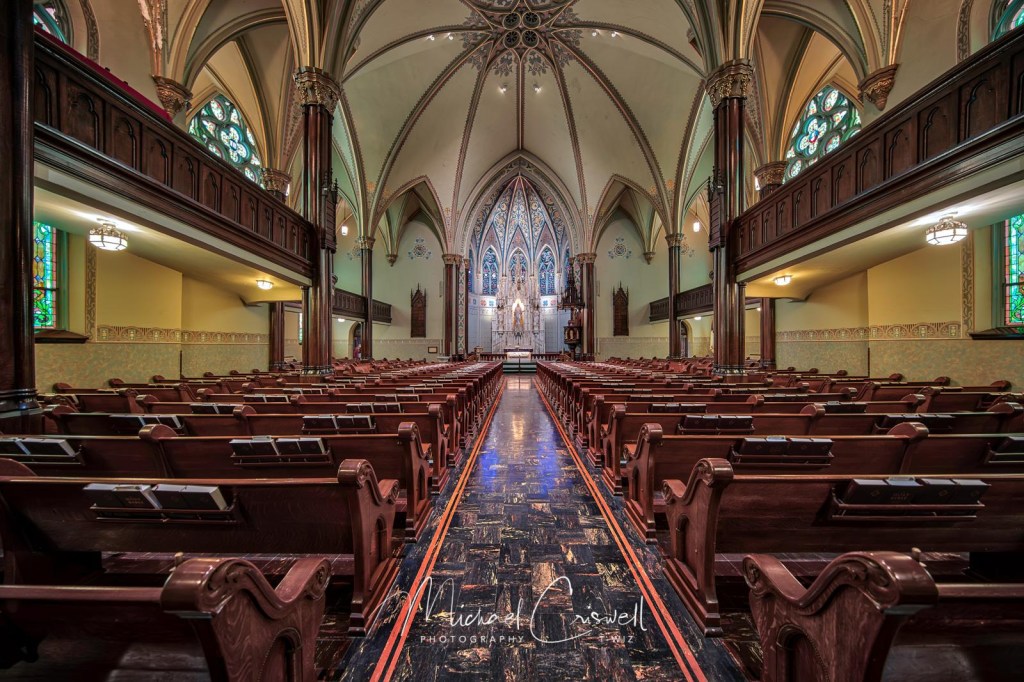


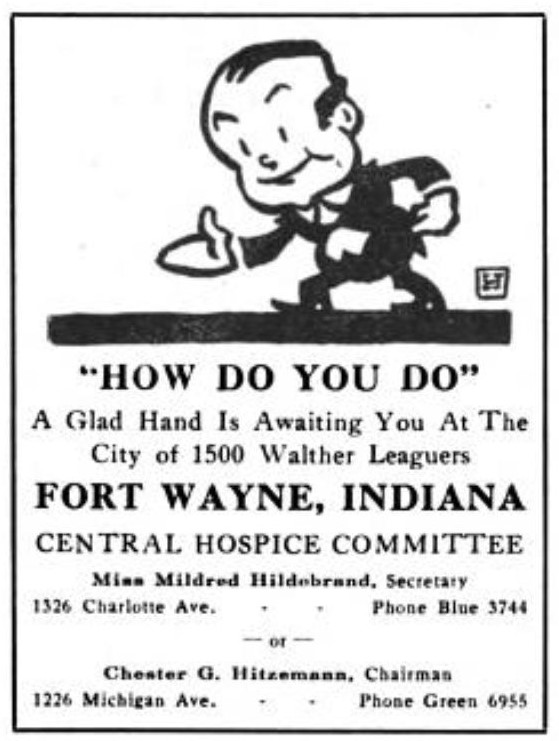


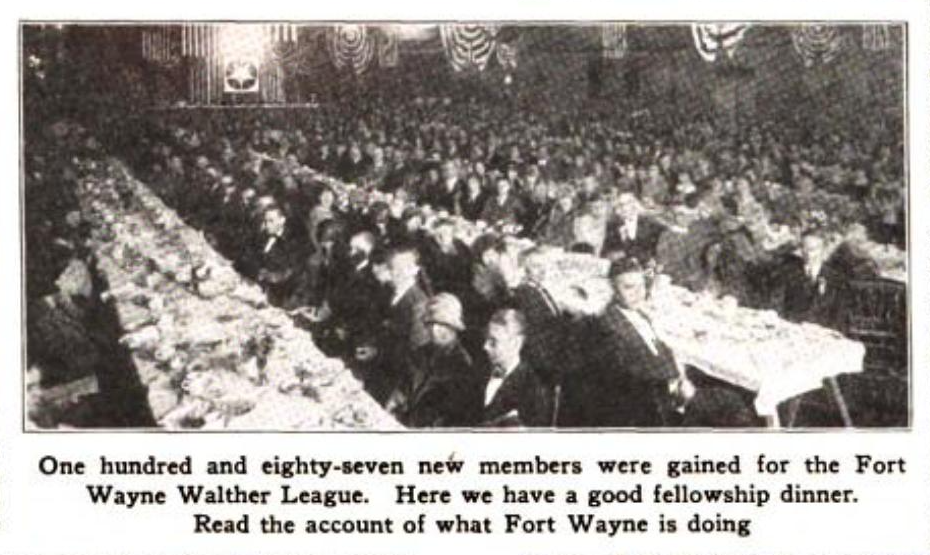
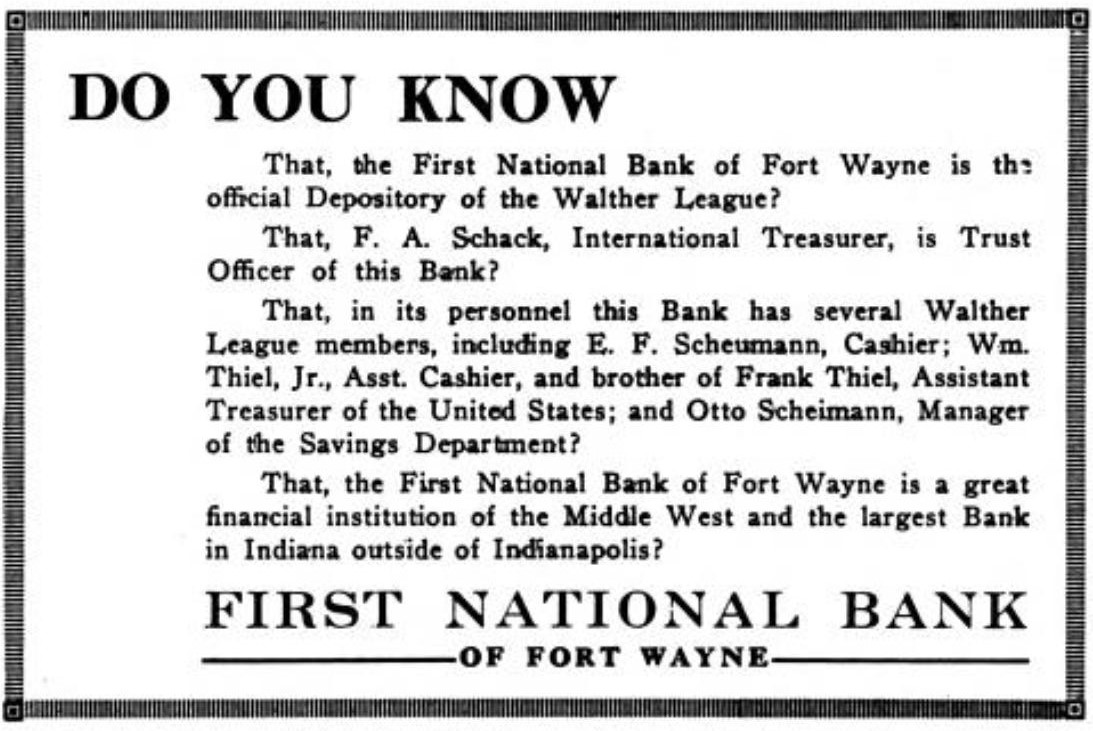

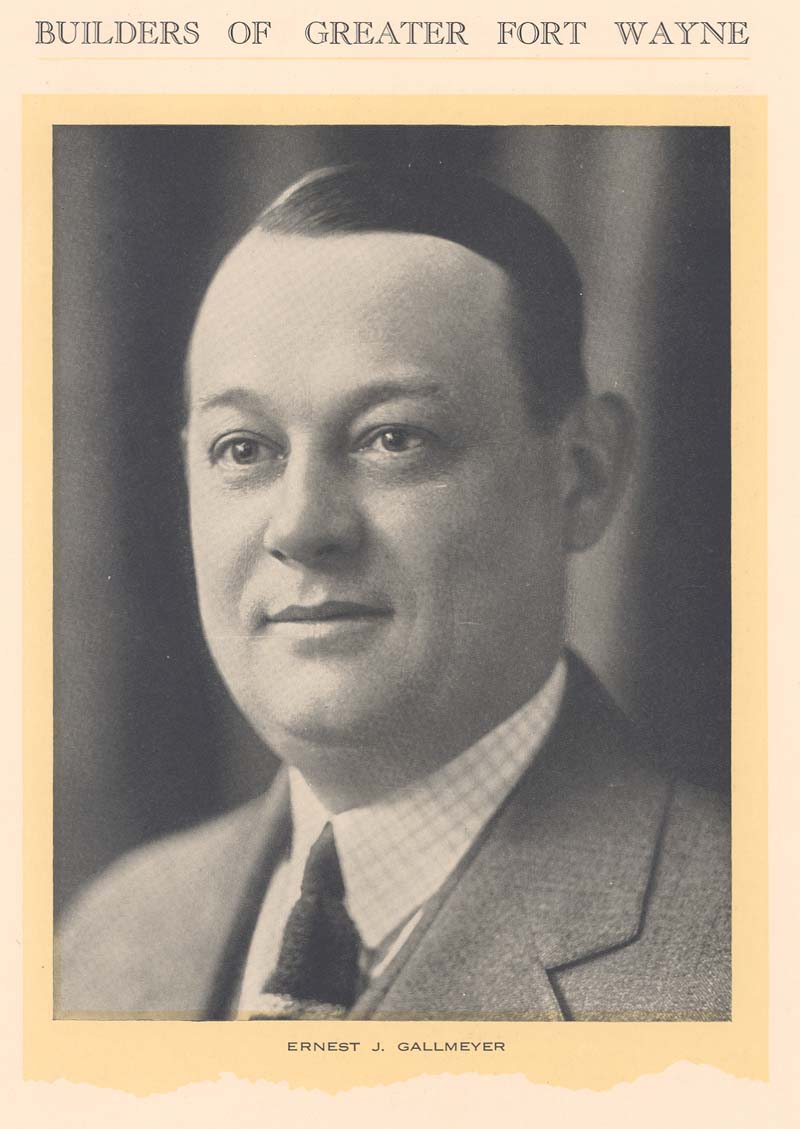


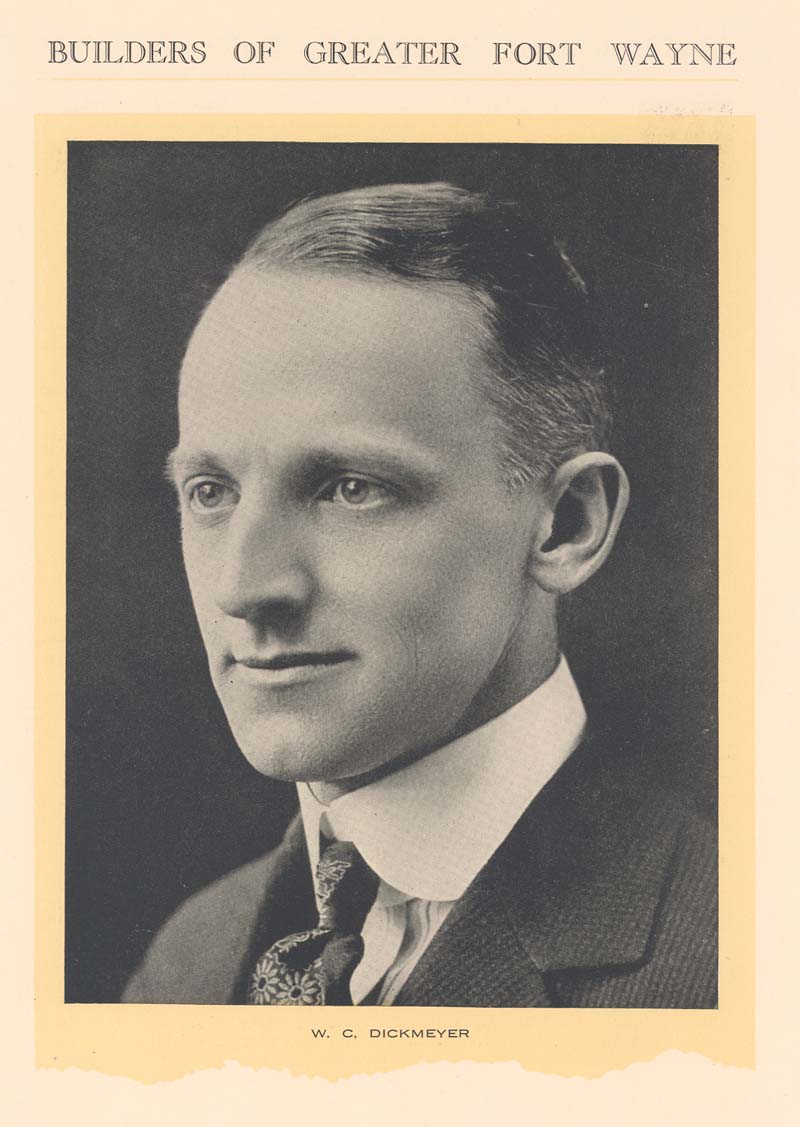

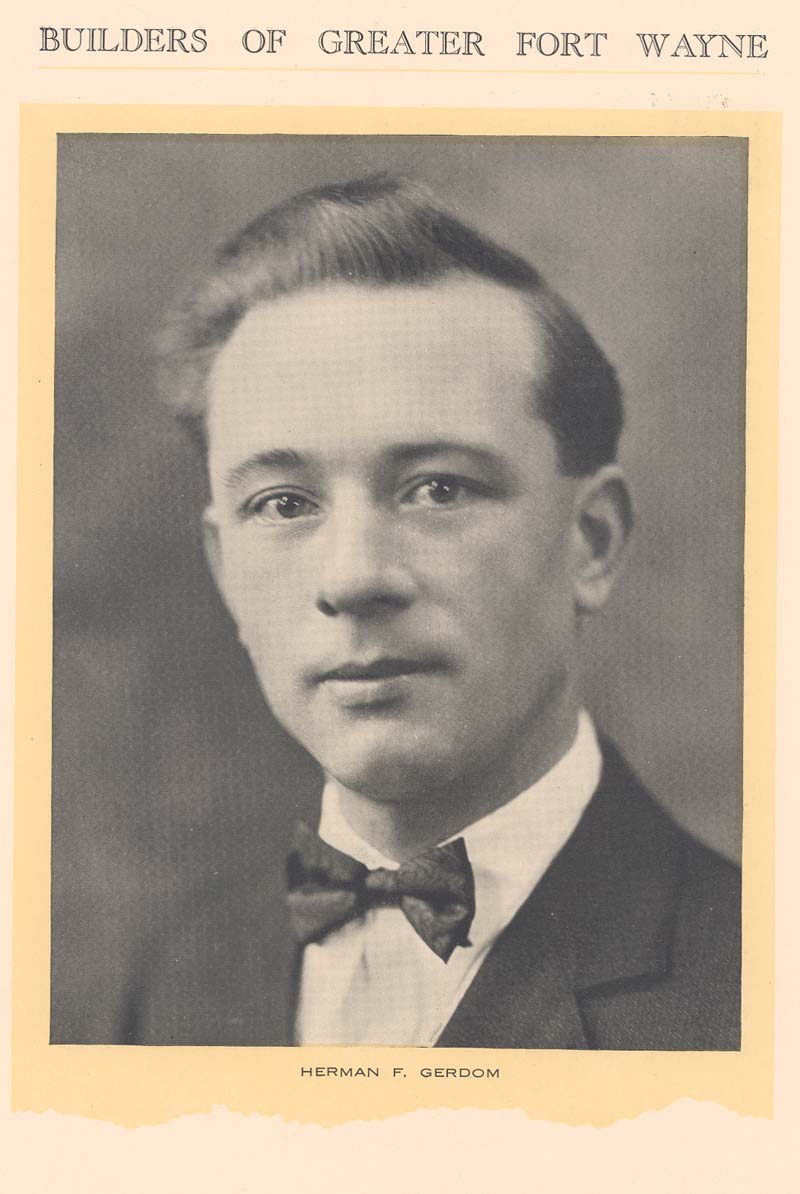
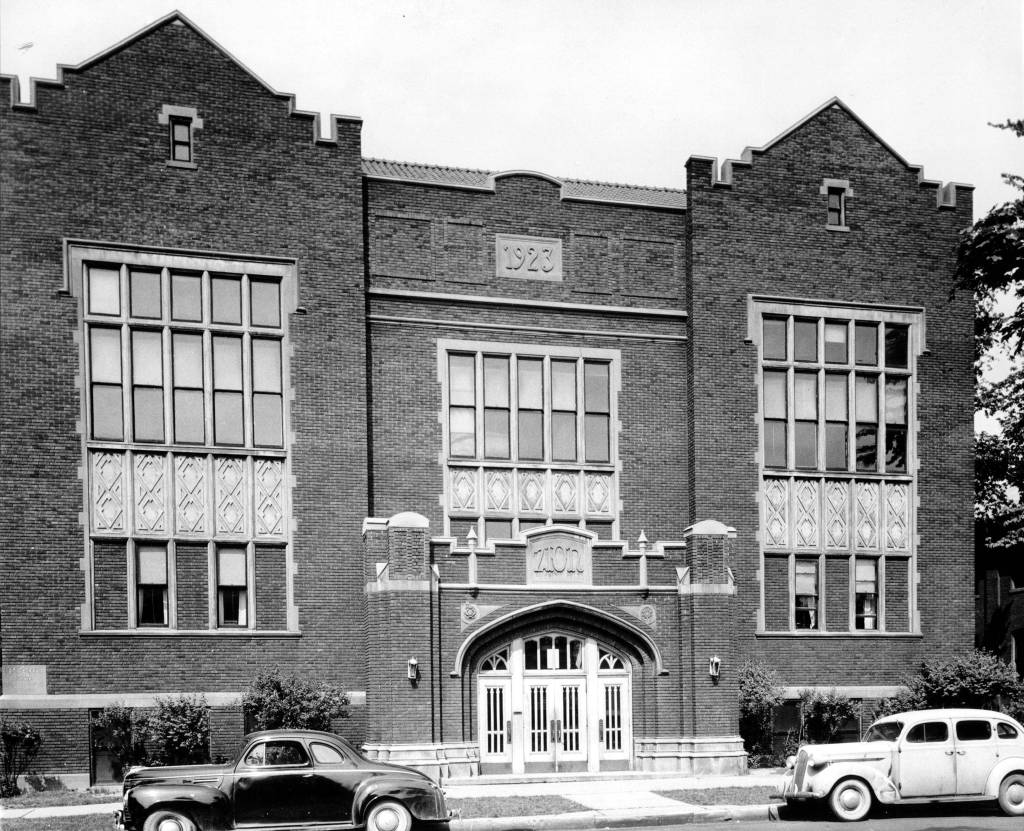


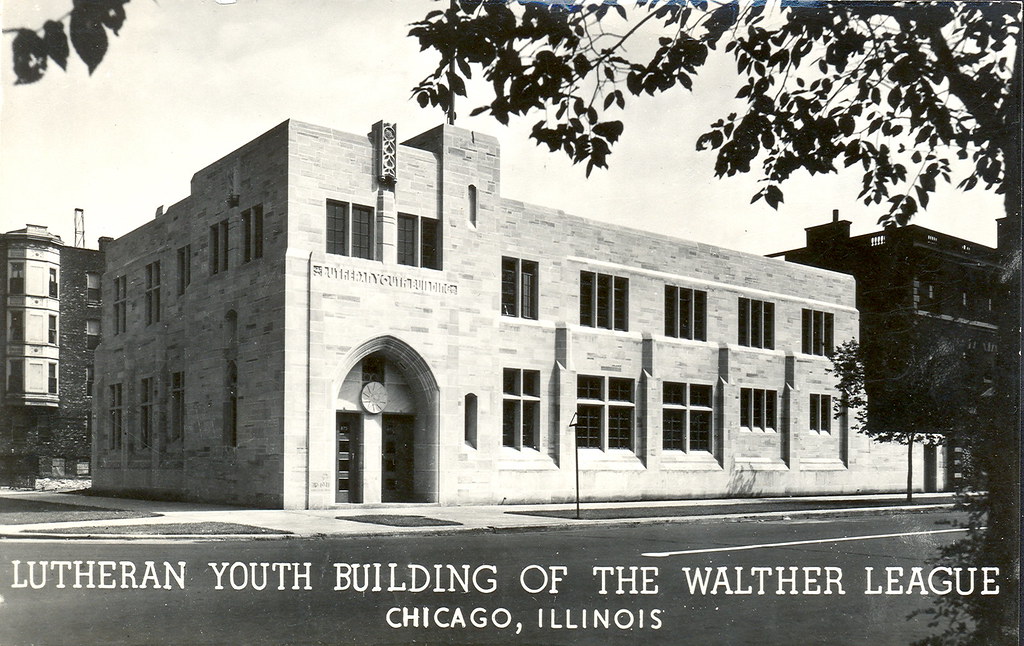


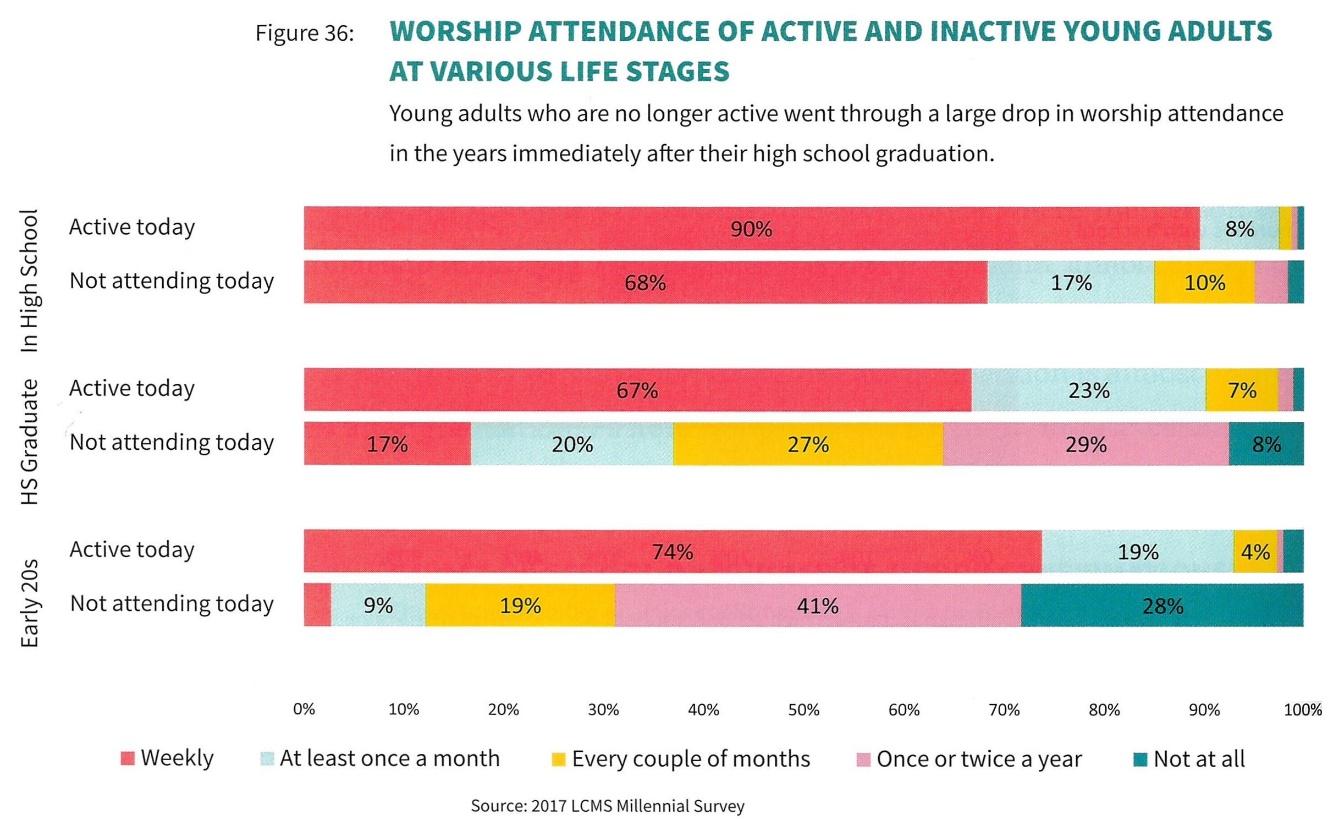
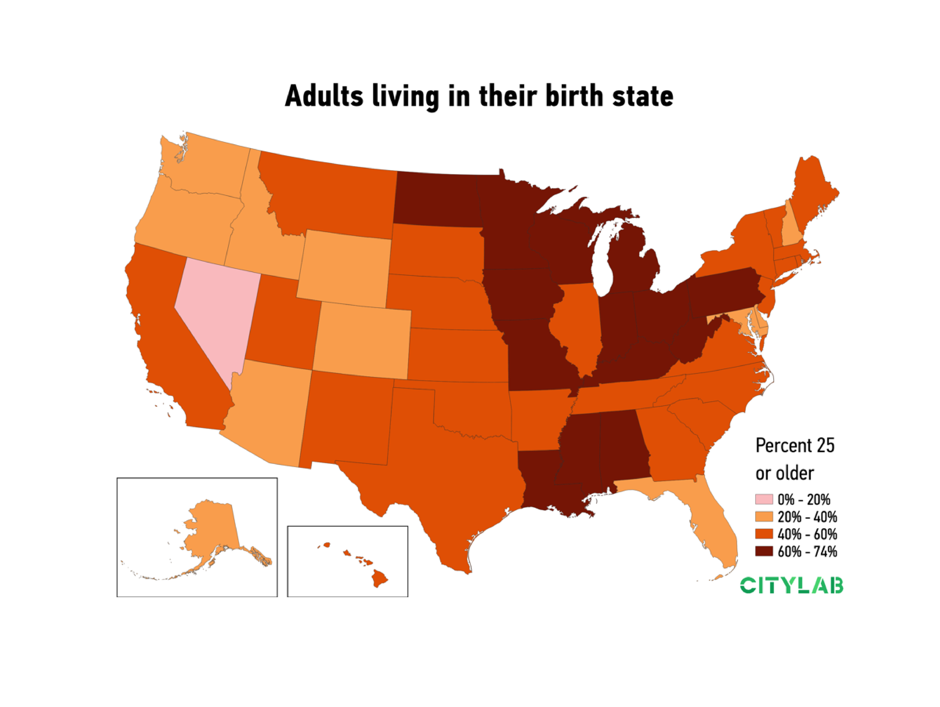
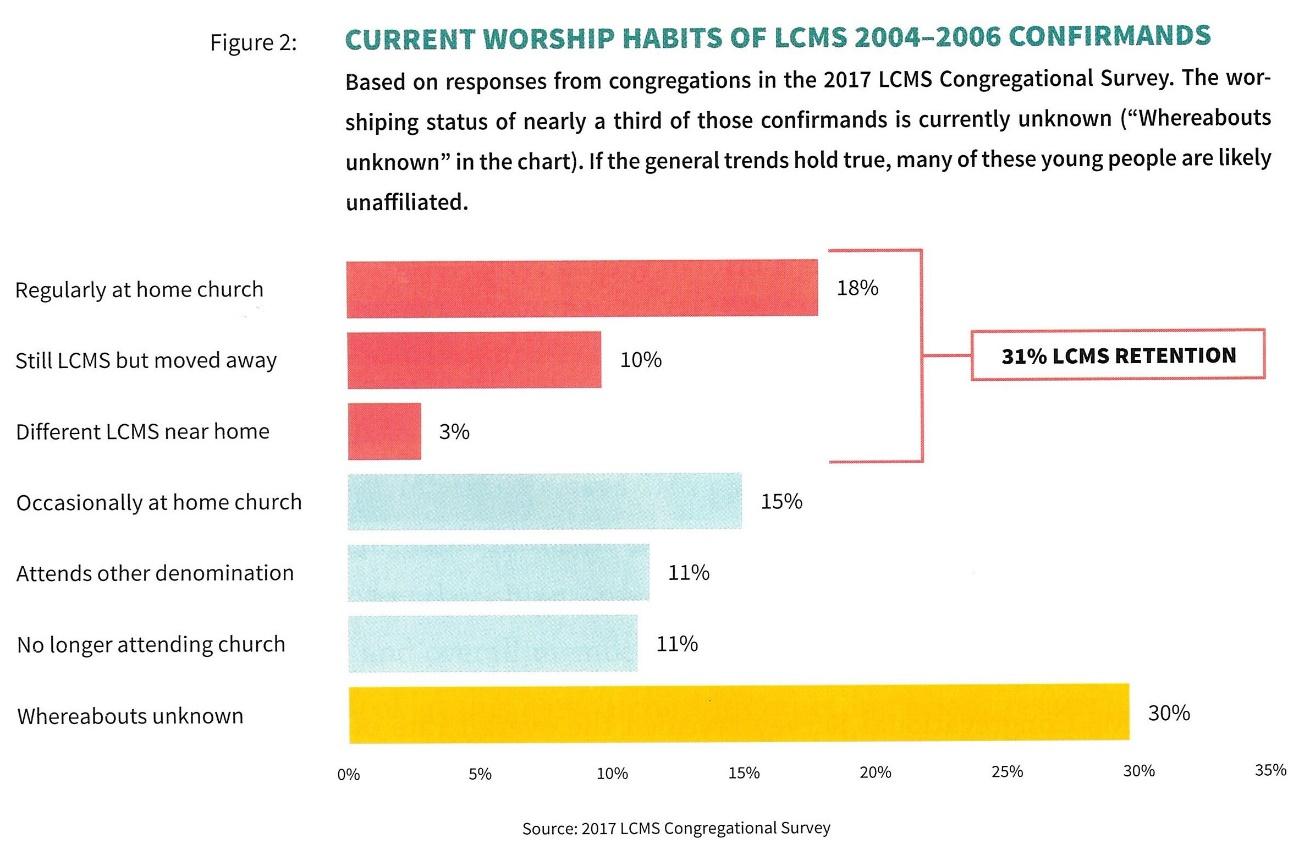
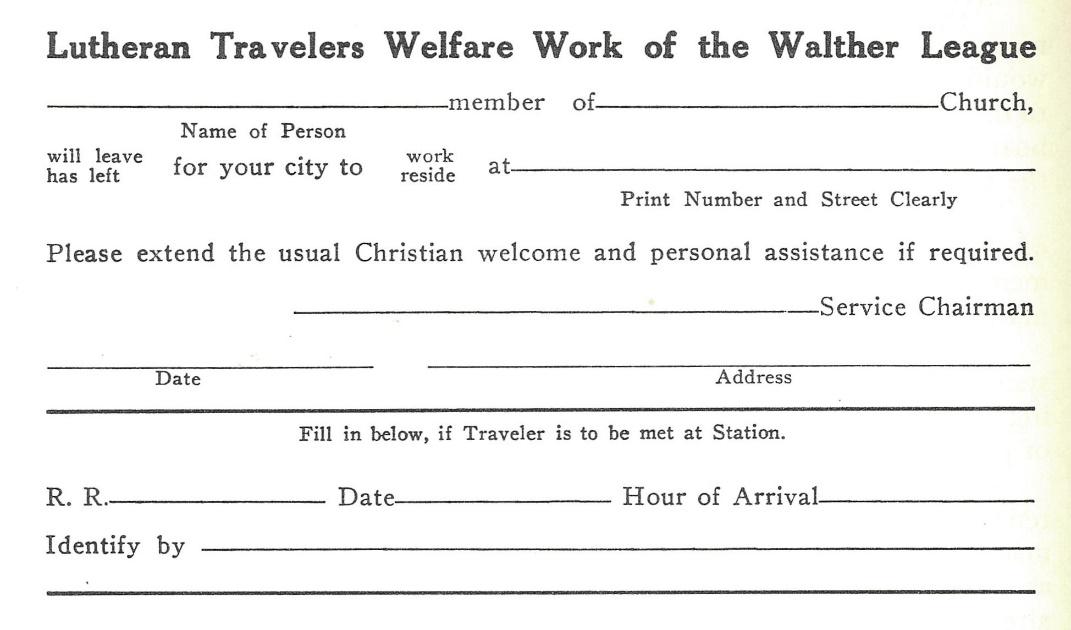
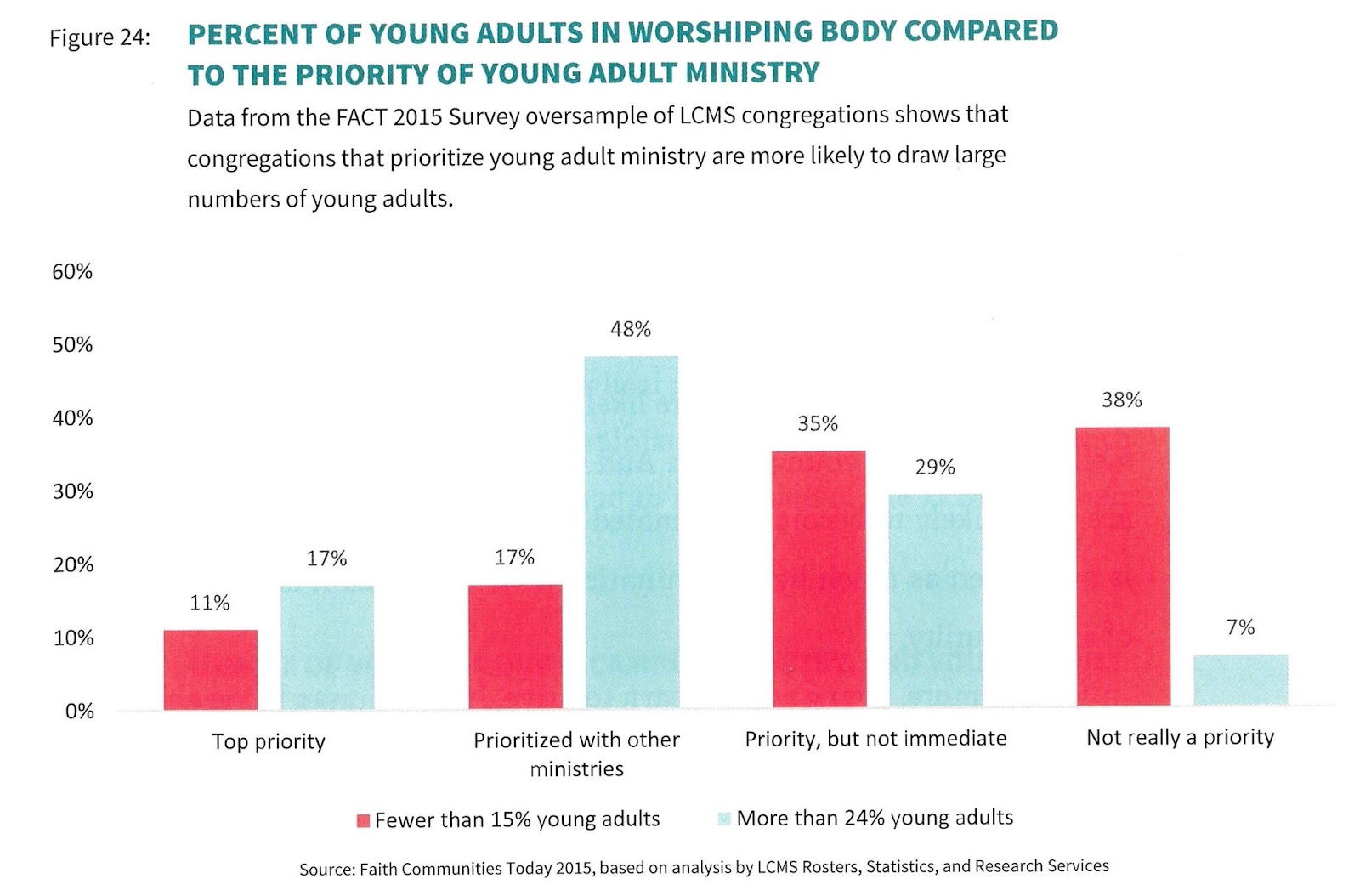

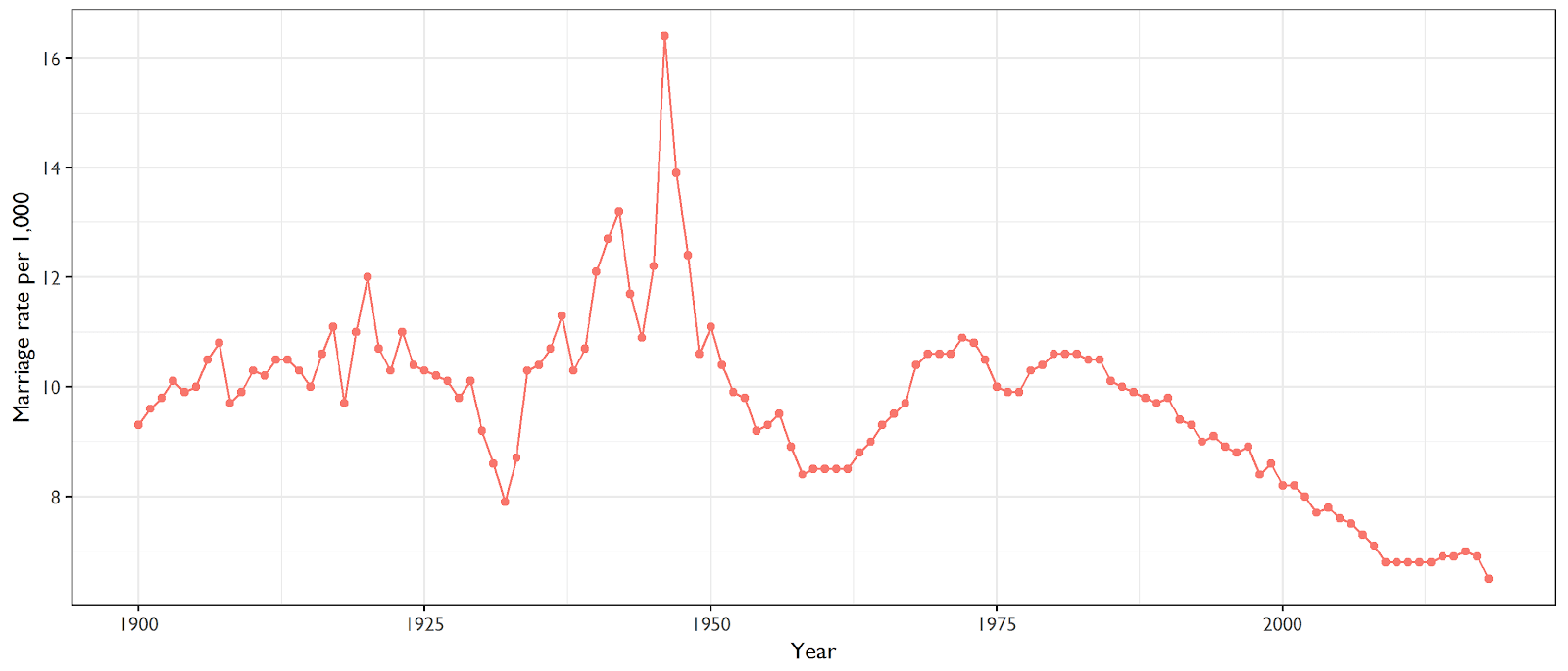
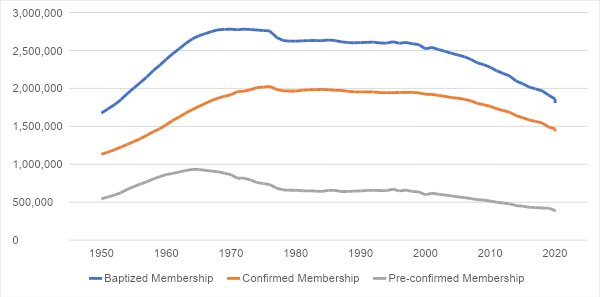
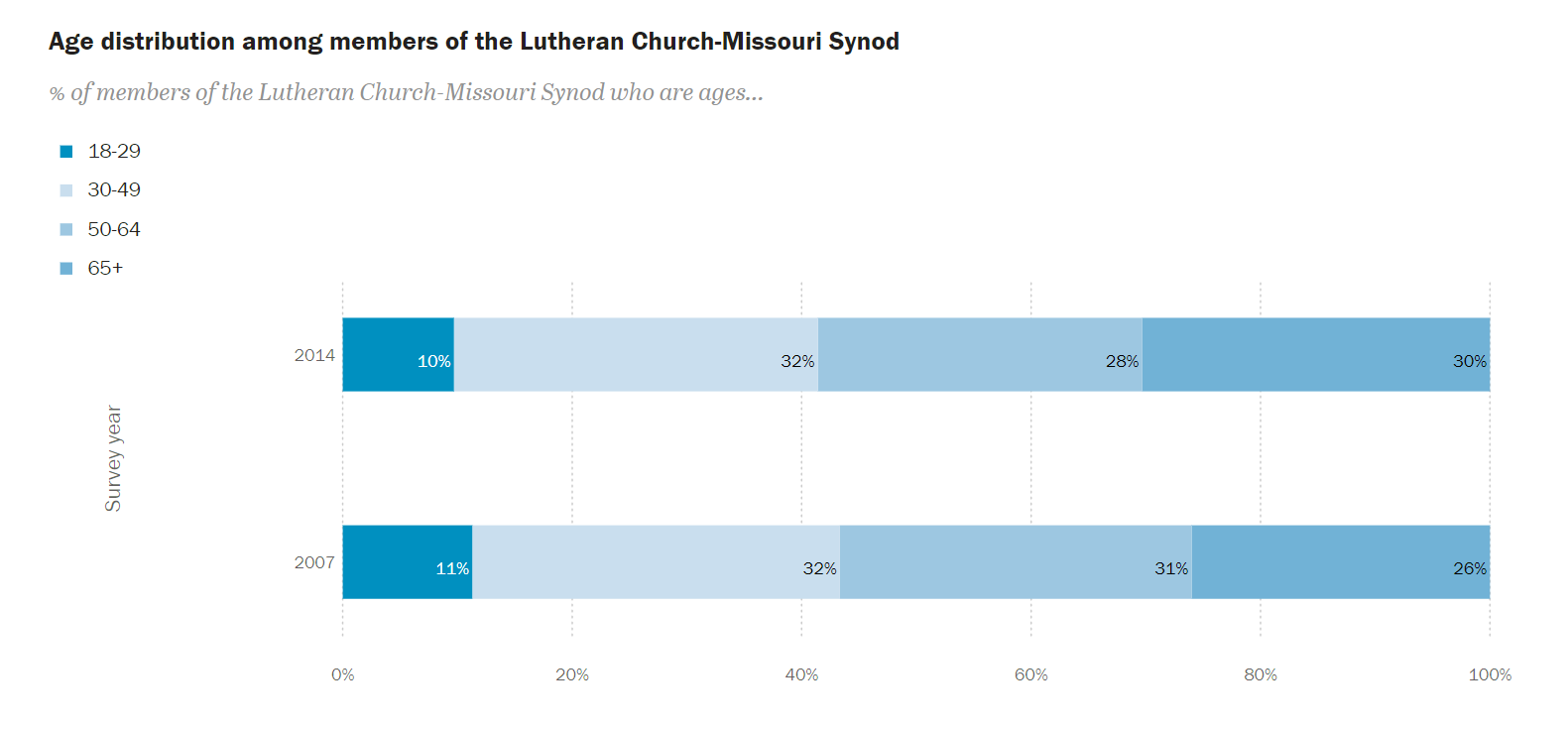
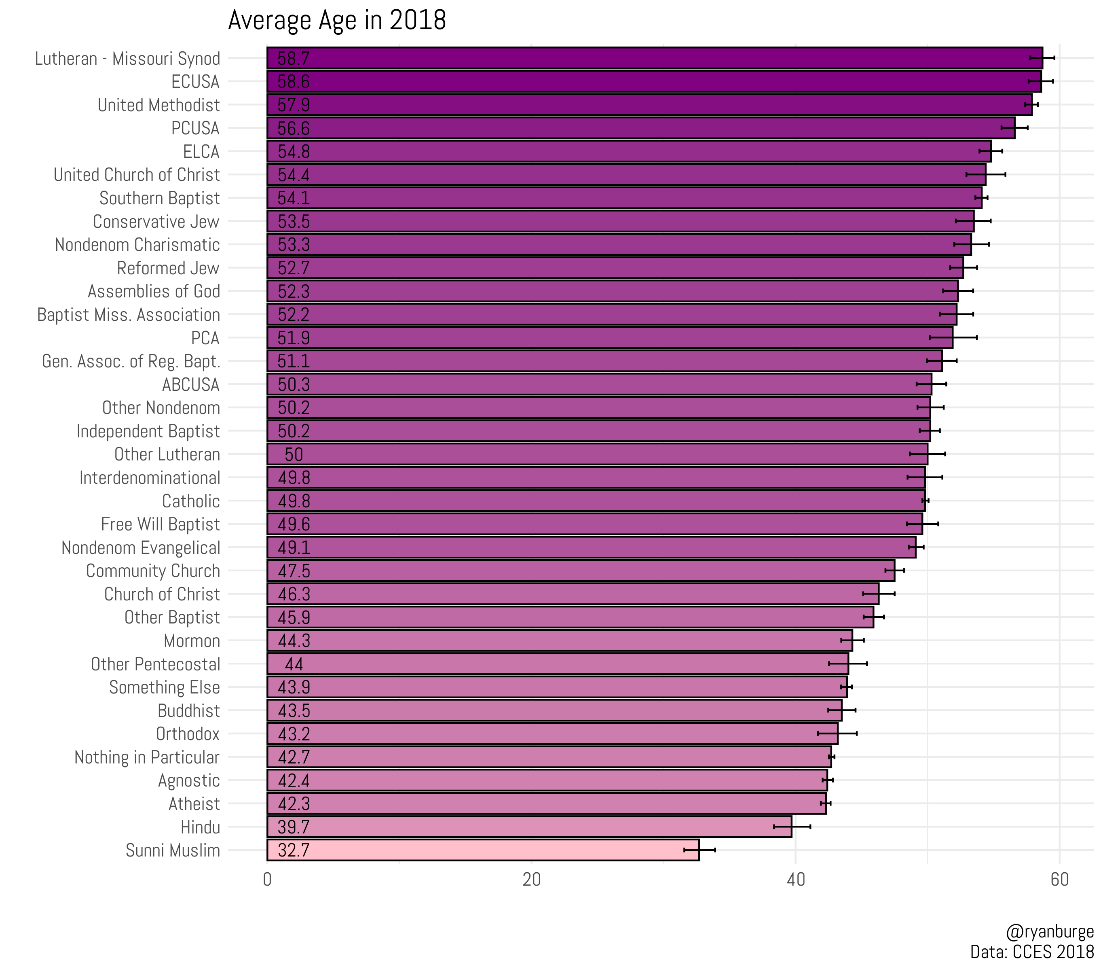
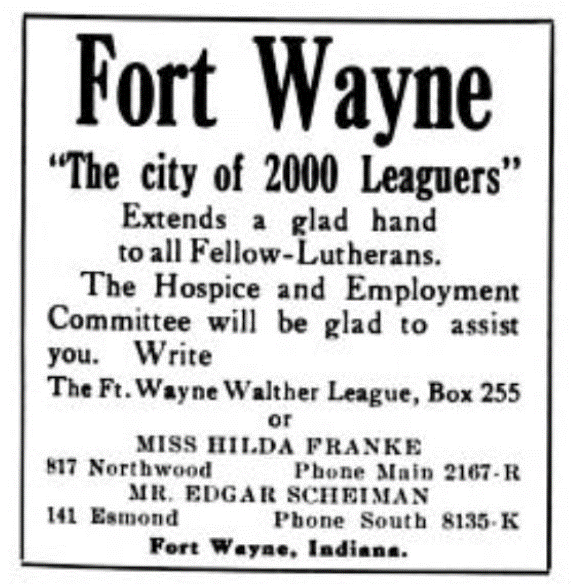


 Walther League Redux
#/media/File:The_Tucker_Tent,_SW_corner,_Lutheran_Medical_Center_2022-04-24.jpg)
3 responses to “Fort Wayne”
Where are you at with things now on a new Walther League? Any new developments? Thanks!
LikeLike
Wondering the same thing…very interested in hearing about progress as our Youth program at church could certainly use some help!
LikeLike
let’s go! The fact that we hold annual youth events (district and national) at secular venues is odd….let’s resurrect the league and bring young people to the campus at Ft Wayne or perhaps LCC in Wyoming.
LikeLike